
- Seen : 428 View
The Cable Connector is composed of two parts, plug and socket. The plug and socket support one or several conductor leads with insulating materials. The conductor material is usually made of high quality copper. For special purposes, gold or silver plating is also used to improve the instantaneous conductivity. Insulators are usually made of Bakelite, and special plastics or even insulating ceramics can be used according to the current requirements. The connecting shell is usually made of copper zinc alloy and copper. The connection between plug and socket is usually thread, which will be more firm. In special occasions, plastic or gasket can be used to adapt to the scene of waterproof and dust. If you encounter vacuum equipment, you have to consider using SGJ vacuum brazed ceramic feed-through or isolator to achieve the function of current passing through and other media not passing through.
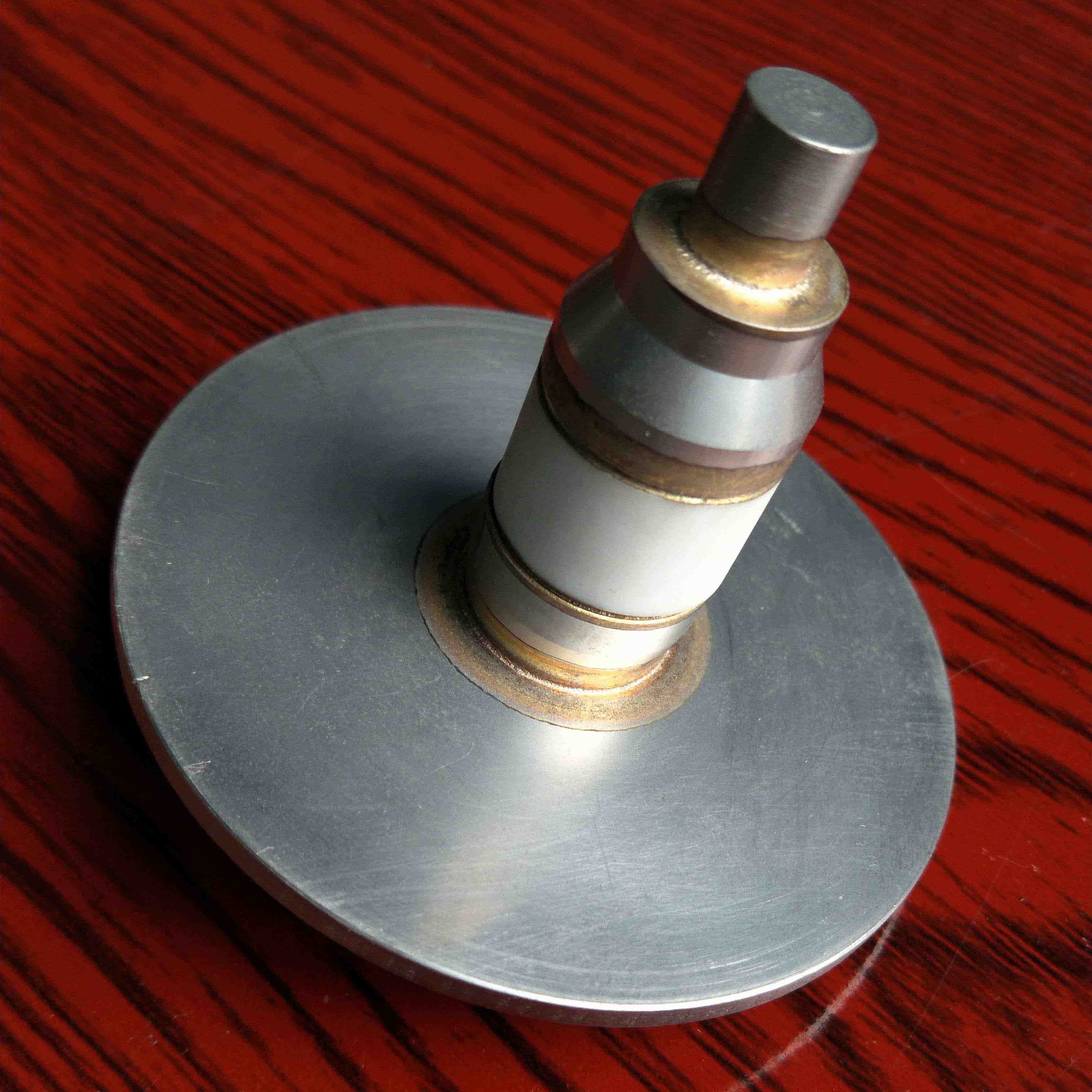
Model: Electric-Isolators & Adapter: SUS 304 & Sleeve: Kovar 4J33 & Insulator: 96% Alumina
Electrical isolators, consist of metal sleeves brazed to each end of an insulating ceramic tube. They are used to introduce cryogenic fluids into a system and to provide electrical isolation of line components. Vacuum isolators are used to provide an electrical break between the vacuum system and other external components.
SGJ isolators typically are made from high-purity alumina ceramics and Metals. The metal hardware is generally a controlled-expansion Kovar 4J33, SUS 304 or OFHC Copper TU1. All materials and braze alloys used are chosen for their specific characteristics and ability to maintain the integrity of the seals for use in demanding applications and environments. The assemblies are brazed together with Silver Copper Eutectic Alloy.
Designed Electrical isolator by SGJ-International (Shaanxi Sgj International Co., Ltd.)
Sgj R&D Electrical Vacuum Connector Be Made of Alumina Ceramic and Kovar Metal Electrode/ Electrical/ Electric Isolator/ Contacts/ Cunductor/Sgj R&D Electrical Vacuum Connector Be Made of Alumina Ceramic and Kovar Metal Electrode/ Electrical/ Electric Isolator/ Contacts/ Cunductor/
Sgj R&D Electrical Vacuum Connector Be Made of Alumina Ceramic and Kovar Metal Electrode/ Electrical/ Electric Isolator/ Contacts/ Cunductor/
Code Parts Materials Note
A Cap/Sleeve SS 304 JIS Code KV-4(Ni33Co17)
B Ceramic Tube 96% alumina Ends metalizing thin layer of Molybdenum
C SS Adapter SS 304 Stainless Steel 304 Coated with Nickel
X Brazing Area Silver+Copper Eutectic Alloy Complete vacuum brazing
Kovar Alloy 4J33:
Kovar is a Nickel-Iron-Cobalt, controlled expansion alloy. It's expansion characteristics match alumina ceramics. This alone ensures it is a highly popular controlled expansion alloys for hermetic sealing applications (Mainly used in Ceramic Metal Seal Assemblies)
OFHC Copper TU1:
CTU1/C102 is an oxygen-free copper which has better forming, resistance to hydrogen embrittlement, and brazing characteristics than C110 ETP. CTU1/C102 has good solderability and corrosion resistance and is used for high current applications.
Stainless Steel SUS 304L:
SUS 304L Stainless Steel famous for its resistivity, fall under the category of Stainless Steel Tubes. Threaded, Hot Rolled, Cold Rolled, Heat Exchangers, Annealed, Pickled.... All these products belonging to the SUS 304L Tubes catalog serve as the prime building blocks of electrochemical, shipping, construction and gas industries.
Metallized Alumina Ceramic:
Vacuum brazing of ceramic and metal requires metal coating in the welding area of ceramic. It ensures good air tightness of metal and alumina metallized ceramic brazing joint in vacuum environment. We SGJ have our own unique patented solder formula to ensure the stability and reliability of our products...
The key of Ceramic-Metal structure based on the vacuum tightness, so called sealing. And , Metallized ceramic bonding area Via vacuum brazing technology is the only solution.
Alumina Manufacturing Description:
Alumina Ceramics can be produced in a wide range of purities with additives designed to enhance its properties. Typical purities range from 85 to 99.7% although Precision Ceramics generally work over 99.7% material.
It can be injection molded, die pressed, isostatically pressed, slip cast and extruded. Once fired and sintered, it can only be machined using diamondgrinding methods but prior to sintering advanced green and biscuit machining techniques developed by Precision Ceramics allow more complex components to be manufactured using traditional machining methods. In addition Alumina can be readily joined to metals or other ceramics using metallising and brazing techniques.
Alumina can be machined in green, biscuit, or fully dense states. While in the green or biscuit form it can be machined relatively easily into complex geometries. However, the sintering process that is required to fully densify the material causes the alumiuna body to shrink approximately 20%. This shrinkage mean
Saler Company Information