
• Seen : 251 View

0
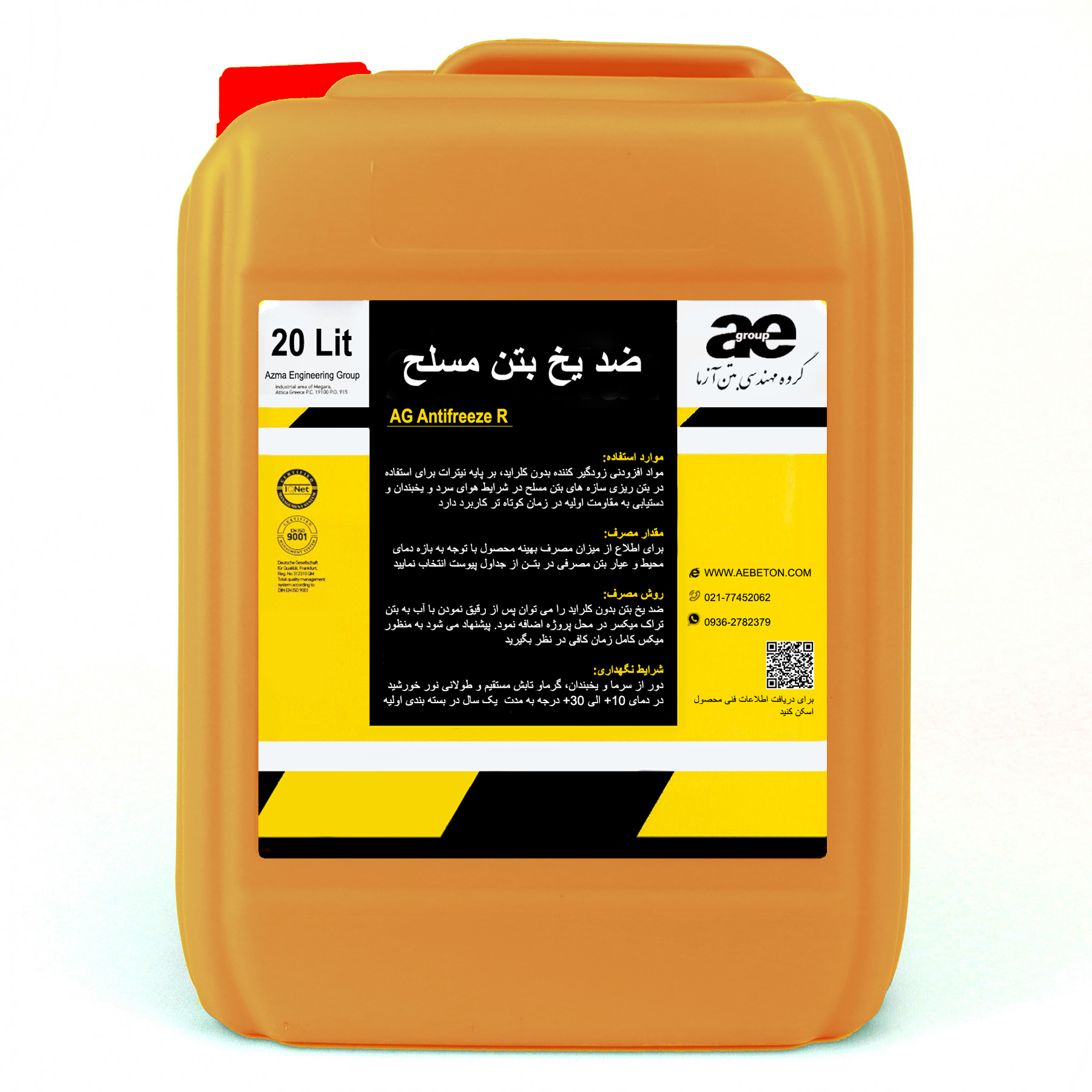
Chloride-free reinforced concrete antifreeze; safe protection of reinforced concrete structures in cold weather If you are looking for an admixture that will protect your concrete from freezing in cold weather conditions while not damaging steel reinforcement, a chloride-free reinforced concrete antifreeze is a must-have choice. By eliminating chloride compounds that cause rebar corrosion, these products are a safe and effective option for all reinforced concrete projects in cold climates. The importance of using chloride-free antifreeze: In reinforced concrete, one of the most important challenges in cold weather is the use of chloride-containing additives. These compounds, when penetrating the concrete and in the presence of moisture and oxygen, cause rust and destruction of the reinforcement, which over time can greatly reduce the durability and useful life of the structure. For this reason, the use of chloride-free additives is absolutely essential for reinforced, prestressed concrete and any structure that is in contact with steel. How does chloride-free antifreeze work? These admixtures protect concrete in cold weather by two main mechanisms. First, by lowering the freezing point of the mixing water, they prevent the water in fresh concrete from freezing, allowing the hydration process to continue at sub-zero temperatures. Second, by accelerating the chemical reactions of the cement, they reduce setting time and increase the early strength of the concrete, allowing the concrete to reach sufficient strength before frost damage occurs. Some admixtures, such as MW Antifreeze, also offer water reduction and workability improvements in addition to these features. Key Benefits: Complete safety against corrosion of reinforcements and suitability for all types of reinforced, prestressed and even self-compacting concrete are the most important advantages of these products. The possibility of pouring concrete at temperatures down to -10°C, increasing initial and final strength, reducing molding time and eliminating the need for heat treatment are other key advantages. These products are also well compatible with other concrete additives such as superplasticizers and can be used in combination with them. Main applications: Concrete pouring in cold weather and low temperature areas. High-critical projects such as bridges, tunnels, tall buildings and prestressed structures. Ready-mix concretes produced and transported in winter. Precast concrete parts that require rapid removal from the formwork in cold conditions. Fast-Track repair projects that require achieving initial strength in the shortest possible time. These products are also very suitable for concreting on freezing nights or temporary cold periods. Suggested dosage: The consumption rate of chloride-free antifreeze usually varies between 1 and 2 kg per 100 kg of cement consumed, and as the temperature decreases, there is a need to increase the consumption. The exact dosage should be determined based on the ambient temperature, cement type, mixing plan and specific project conditions, and conducting field tests is absolutely necessary to achieve optimal performance.

Saler Company Information

Company : گروه مهندسی بتن آزما
Phone : 02177452062
More Information : View
Online order registration form
No comments have been posted yet
loading
Your comment has been sent
Chloride-free reinforced concrete antifreeze; safe protection of reinforced concrete structures in cold weather If you are looking for an admixture that will protect your concrete from freezing in cold weather conditions while not damaging steel reinforcement, a chloride-free reinforced concrete antifreeze is a must-have choice. By eliminating chloride compounds that cause rebar corrosion, these products are a safe and effective option for all reinforced concrete projects in cold climates. The importance of using chloride-free antifreeze: In reinforced concrete, one of the most important challenges in cold weather is the use of chloride-containing additives. These compounds, when penetrating the concrete and in the presence of moisture and oxygen, cause rust and destruction of the reinforcement, which over time can greatly reduce the durability and useful life of the structure. For this reason, the use of chloride-free additives is absolutely essential for reinforced, prestressed concrete and any structure that is in contact with steel. How does chloride-free antifreeze work? These admixtures protect concrete in cold weather by two main mechanisms. First, by lowering the freezing point of the mixing water, they prevent the water in fresh concrete from freezing, allowing the hydration process to continue at sub-zero temperatures. Second, by accelerating the chemical reactions of the cement, they reduce setting time and increase the early strength of the concrete, allowing the concrete to reach sufficient strength before frost damage occurs. Some admixtures, such as MW Antifreeze, also offer water reduction and workability improvements in addition to these features. Key Benefits: Complete safety against corrosion of reinforcements and suitability for all types of reinforced, prestressed and even self-compacting concrete are the most important advantages of these products. The possibility of pouring concrete at temperatures down to -10°C, increasing initial and final strength, reducing molding time and eliminating the need for heat treatment are other key advantages. These products are also well compatible with other concrete additives such as superplasticizers and can be used in combination with them. Main applications: Concrete pouring in cold weather and low temperature areas. High-critical projects such as bridges, tunnels, tall buildings and prestressed structures. Ready-mix concretes produced and transported in winter. Precast concrete parts that require rapid removal from the formwork in cold conditions. Fast-Track repair projects that require achieving initial strength in the shortest possible time. These products are also very suitable for concreting on freezing nights or temporary cold periods. Suggested dosage: The consumption rate of chloride-free antifreeze usually varies between 1 and 2 kg per 100 kg of cement consumed, and as the temperature decreases, there is a need to increase the consumption. The exact dosage should be determined based on the ambient temperature, cement type, mixing plan and specific project conditions, and conducting field tests is absolutely necessary to achieve optimal performance.

Saler Company Information

Company : گروه مهندسی بتن آزما
Phone : 02177452062
More Information : View
Online order registration form