
• Seen : 206 View

0
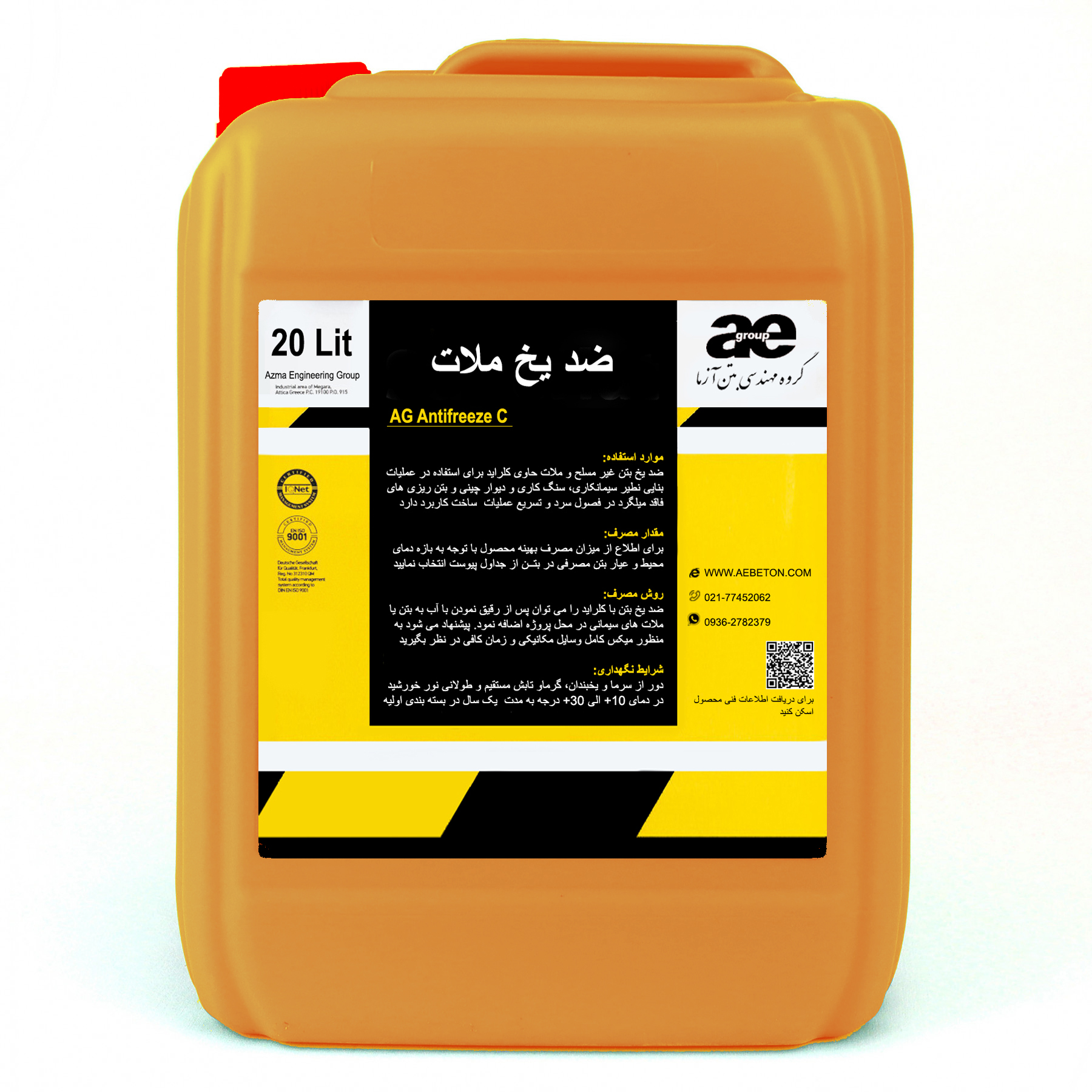
Chloride antifreeze for unreinforced concrete and mortar; an economical solution for concreting in cold weather If you are looking for a cost-effective and effective solution to prevent concrete from freezing in cold weather, chloride-based antifreezes are an ideal choice for unreinforced concrete and cement mortars. These products, which are mainly based on calcium chloride and sodium chloride, are the oldest and most common chemical admixtures used to accelerate setting and develop strength at low temperatures. What is chloride antifreeze and how does it work? Chloride-based antifreezes are quick-setting admixtures that accelerate the cement hydration reaction, increasing both the setting and hardening of cement paste. Calcium chloride (CaCl2), first used in concrete in 1886, is still the most important and effective material in this category. It increases the rate of hydration of the C3S and C2S phases of cement, generating more heat and accelerating the hardening process of concrete, while lowering the freezing point of water in the mix. Key Benefits: Lower price compared to chloride-free products, making it a cost-effective option for unreinforced projects. Significantly increases the early strength of concrete and mortar, allowing for faster formwork and project progress in cold weather conditions. Simultaneously accelerates the hydration of Portland cement types and cementitious admixtures such as slag, pozzolanic cement and fly ash. Lowers the freezing point of mixing water and prevents freezing at sub-zero temperatures. Increases the workability of concrete in some chloride-containing admixtures, which helps improve construction operations. Main applications: Concreting in cold weather and low temperature areas, especially in unreinforced projects. Production of cement mortars for masonry, plastering and facade work in winter. General concreting in unreinforced structures such as foundations, floors and unreinforced foundations. Repair and restoration projects that require rapid setting in cold conditions. Precast concrete parts without reinforcement that require rapid removal from the formwork. Shotcrete and concrete spraying in less important construction projects. Warnings and usage restrictions: The most important limitation of chloride antifreezes is the risk of severe corrosion of steel used in reinforced concrete. Chloride ions can migrate through concrete and in the presence of moisture and oxygen, causing rust and destruction of reinforcement. Therefore, the use of these products in reinforced concrete, prestressed concrete structures and any structure that is in contact with metals is strictly prohibited. Also, excessive consumption can cause color changes in the concrete surface and operational problems such as very rapid setting and reduced efficiency. Suggested dosage: The amount of chloride antifreeze used usually varies between 1 and 2% of the weight of the cement used, and the need for more consumption increases as the temperature decreases. It is recommended that this material be added to the mixture just before pouring to prevent premature setting. It is absolutely necessary to conduct field tests to determine the optimal dosage according to the ambient temperature, cement type and mixing design.

Saler Company Information

Company : گروه مهندسی بتن آزما
Phone : 02177452062
More Information : View
Online order registration form
No comments have been posted yet
loading
Your comment has been sent
Chloride antifreeze for unreinforced concrete and mortar; an economical solution for concreting in cold weather If you are looking for a cost-effective and effective solution to prevent concrete from freezing in cold weather, chloride-based antifreezes are an ideal choice for unreinforced concrete and cement mortars. These products, which are mainly based on calcium chloride and sodium chloride, are the oldest and most common chemical admixtures used to accelerate setting and develop strength at low temperatures. What is chloride antifreeze and how does it work? Chloride-based antifreezes are quick-setting admixtures that accelerate the cement hydration reaction, increasing both the setting and hardening of cement paste. Calcium chloride (CaCl2), first used in concrete in 1886, is still the most important and effective material in this category. It increases the rate of hydration of the C3S and C2S phases of cement, generating more heat and accelerating the hardening process of concrete, while lowering the freezing point of water in the mix. Key Benefits: Lower price compared to chloride-free products, making it a cost-effective option for unreinforced projects. Significantly increases the early strength of concrete and mortar, allowing for faster formwork and project progress in cold weather conditions. Simultaneously accelerates the hydration of Portland cement types and cementitious admixtures such as slag, pozzolanic cement and fly ash. Lowers the freezing point of mixing water and prevents freezing at sub-zero temperatures. Increases the workability of concrete in some chloride-containing admixtures, which helps improve construction operations. Main applications: Concreting in cold weather and low temperature areas, especially in unreinforced projects. Production of cement mortars for masonry, plastering and facade work in winter. General concreting in unreinforced structures such as foundations, floors and unreinforced foundations. Repair and restoration projects that require rapid setting in cold conditions. Precast concrete parts without reinforcement that require rapid removal from the formwork. Shotcrete and concrete spraying in less important construction projects. Warnings and usage restrictions: The most important limitation of chloride antifreezes is the risk of severe corrosion of steel used in reinforced concrete. Chloride ions can migrate through concrete and in the presence of moisture and oxygen, causing rust and destruction of reinforcement. Therefore, the use of these products in reinforced concrete, prestressed concrete structures and any structure that is in contact with metals is strictly prohibited. Also, excessive consumption can cause color changes in the concrete surface and operational problems such as very rapid setting and reduced efficiency. Suggested dosage: The amount of chloride antifreeze used usually varies between 1 and 2% of the weight of the cement used, and the need for more consumption increases as the temperature decreases. It is recommended that this material be added to the mixture just before pouring to prevent premature setting. It is absolutely necessary to conduct field tests to determine the optimal dosage according to the ambient temperature, cement type and mixing design.

Saler Company Information

Company : گروه مهندسی بتن آزما
Phone : 02177452062
More Information : View
Online order registration form