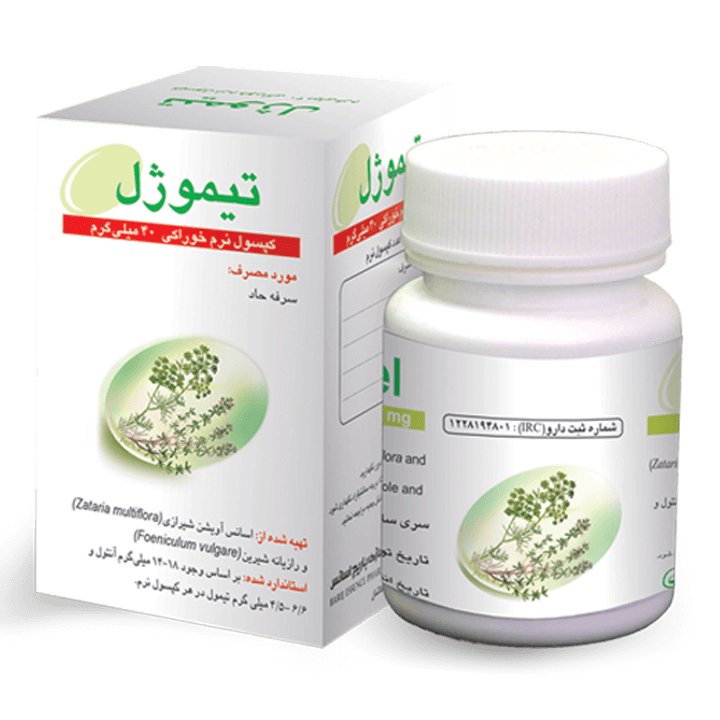
Timogel
  • Seen : 751 View

0
Timogel

Thyme:

E Commission has approved the use of thyme for cough and bronchitis. Thymol and carvacrol have a wide range of effects against bacteria involved in upper respiratory tract infections. It is believed that thymol and carvacrol add antibacterial activity by creating a complex with bacterial membrane proteins. There is also a synergistic effect on the combination of thymol and carvacrol. Additionally, doses of thymol and carvacrol have a trait relaxant effect. Various trials have confirmed the effect of thyme on productive cough. In a randomized, double-blind, randomized study, 60 patients with coughing-sore thymus or bromine hexin were given for a period of 5 days. There was no significant difference between the two groups according to the patient's disease symptoms, and both groups took the same benefits from taking the medication. Significant progress was observed in the rate of recovery from non-smokers compared to smokers in both groups.

In the study of the antibacterial effect of Shirazi thyme against standard strains of S. australum, Escherichia coli, Streptococcus pyogenes, Streptococcus pneumoniae, Proteus mirabilis and Bacillus cereus, it has been shown that this essential oil has good anti-bacterial effects against these microorganisms. MIC values ​​were reported from 0.39 mg / mL to 1.56 mg / ml, and golden staphylococci was more sensitive than other bacteria (0.39 mg / mL). Streptococcus pyogenes (1.56 mg / mL) and proteus mirabilis (1.56 mg / mL) were the most resistant bacteria. In the case of Streptococcus pneumoniae, Escherichia coli and Bacillus cereus, the same MIC was 0.78 mg / mL.

In the study of chemical compounds and anti-staphylococcal activity of essential oil of Shirazi and its synergistic effect with vancomycin, it was determined that the essential components of this essential oil were thymol (38.7%), carvacrol (15.3%) and (10.2%) r- Cymene, and its MIC and MBC were reported to be resistant to methicillin sensitive to Staphylococcus aureus and 0.25-1.2 μl / ml, respectively, and the essential oil showed synergistic effects with vancomycin. The researchers concluded that the essential oil of Shiraz may be useful in controlling the infection caused by methicillin-resistant golden staphylococci (MRSA).

2. Fennel:

E Commission has approved the use of fennel to treat inflammation of the upper respiratory tract mucous membrane. Fennel, an expectorant, increases the activity of the mucosal epithelium of the respiratory tract. The chemical structure of the anethole in the fennel is similar to the catecholamines (adrenaline, noradrenaline and dopamine), and like the adrenalin, the bronchodilator is fennel. In guinea pigs; prescribing an apple fennel essential oil has a mild anti-tussive effect or a cough suppressant on coughing caused by mechanical stimuli. Antimicrobial activity of fennel essential oil is equivalent to or more than strepto penicillin, penicillin and tetracycline antibiotics.

3- Thyme and fennel:

In order to evaluate the effects of essential oil of thyme and fennel on coughing, during a randomized, double blind randomized controlled trial, 119 patients aged more than 14 years with acute cough, three times a day, 20 drops of toluicide Containing essential oils of sweet almonds and essential oil of Shiitami), or drops of clopidogrel or placebo for 3 days. At the end of this period, complete recovery was reported in the group using tosucine and calobotinol drops (50%) and in the placebo group (9.1%). The efficacy of tosucine drops, doses of clopidogrel and placebo in patients with cough was 66.6% 55% and 14.3%, respectively, and 56.5%, 55% and 20% respectively, respectively. There was a significant difference in the rate of cough remission between tosucin drops and placebo (p <0.01), but there was no significant difference between tosucine drops and colobutinol drop (p> 0.4)

In another uncontrolled double-blind trial, 62 patients with acute cough were randomly assigned into two groups of taco-soft capsules (containing essential oils of sweet and savory vetiver essential oil) or placebo to use a soft capsule every 8 hours for 3 days . After reassessment of patients and data collection, the rate of recovery was calculated and in order to compare the treatment groups, Chi-square tests and Fisher's exact test were used. The results of this study showed that after 72 hours, complete stopping of coughing occurred in 62.5% of the patients in the soft capsule of timogel and in 20% of the patients in the placebo group (P = 0.008). Due to the fungal effects of fungal infections, cough relief, with the help of sputum outflow, is a feature of the soft thymogel capsule.

Saler Company Information

Company : Barije Ssence
Phone : 00982144267992
More Information : View
Online order registration form
No comments have been posted yet
loading
Your comment has been sent
Timogel

Thyme:

E Commission has approved the use of thyme for cough and bronchitis. Thymol and carvacrol have a wide range of effects against bacteria involved in upper respiratory tract infections. It is believed that thymol and carvacrol add antibacterial activity by creating a complex with bacterial membrane proteins. There is also a synergistic effect on the combination of thymol and carvacrol. Additionally, doses of thymol and carvacrol have a trait relaxant effect. Various trials have confirmed the effect of thyme on productive cough. In a randomized, double-blind, randomized study, 60 patients with coughing-sore thymus or bromine hexin were given for a period of 5 days. There was no significant difference between the two groups according to the patient's disease symptoms, and both groups took the same benefits from taking the medication. Significant progress was observed in the rate of recovery from non-smokers compared to smokers in both groups.

In the study of the antibacterial effect of Shirazi thyme against standard strains of S. australum, Escherichia coli, Streptococcus pyogenes, Streptococcus pneumoniae, Proteus mirabilis and Bacillus cereus, it has been shown that this essential oil has good anti-bacterial effects against these microorganisms. MIC values ​​were reported from 0.39 mg / mL to 1.56 mg / ml, and golden staphylococci was more sensitive than other bacteria (0.39 mg / mL). Streptococcus pyogenes (1.56 mg / mL) and proteus mirabilis (1.56 mg / mL) were the most resistant bacteria. In the case of Streptococcus pneumoniae, Escherichia coli and Bacillus cereus, the same MIC was 0.78 mg / mL.

In the study of chemical compounds and anti-staphylococcal activity of essential oil of Shirazi and its synergistic effect with vancomycin, it was determined that the essential components of this essential oil were thymol (38.7%), carvacrol (15.3%) and (10.2%) r- Cymene, and its MIC and MBC were reported to be resistant to methicillin sensitive to Staphylococcus aureus and 0.25-1.2 μl / ml, respectively, and the essential oil showed synergistic effects with vancomycin. The researchers concluded that the essential oil of Shiraz may be useful in controlling the infection caused by methicillin-resistant golden staphylococci (MRSA).

2. Fennel:

E Commission has approved the use of fennel to treat inflammation of the upper respiratory tract mucous membrane. Fennel, an expectorant, increases the activity of the mucosal epithelium of the respiratory tract. The chemical structure of the anethole in the fennel is similar to the catecholamines (adrenaline, noradrenaline and dopamine), and like the adrenalin, the bronchodilator is fennel. In guinea pigs; prescribing an apple fennel essential oil has a mild anti-tussive effect or a cough suppressant on coughing caused by mechanical stimuli. Antimicrobial activity of fennel essential oil is equivalent to or more than strepto penicillin, penicillin and tetracycline antibiotics.

3- Thyme and fennel:

In order to evaluate the effects of essential oil of thyme and fennel on coughing, during a randomized, double blind randomized controlled trial, 119 patients aged more than 14 years with acute cough, three times a day, 20 drops of toluicide Containing essential oils of sweet almonds and essential oil of Shiitami), or drops of clopidogrel or placebo for 3 days. At the end of this period, complete recovery was reported in the group using tosucine and calobotinol drops (50%) and in the placebo group (9.1%). The efficacy of tosucine drops, doses of clopidogrel and placebo in patients with cough was 66.6% 55% and 14.3%, respectively, and 56.5%, 55% and 20% respectively, respectively. There was a significant difference in the rate of cough remission between tosucin drops and placebo (p <0.01), but there was no significant difference between tosucine drops and colobutinol drop (p> 0.4)

In another uncontrolled double-blind trial, 62 patients with acute cough were randomly assigned into two groups of taco-soft capsules (containing essential oils of sweet and savory vetiver essential oil) or placebo to use a soft capsule every 8 hours for 3 days . After reassessment of patients and data collection, the rate of recovery was calculated and in order to compare the treatment groups, Chi-square tests and Fisher's exact test were used. The results of this study showed that after 72 hours, complete stopping of coughing occurred in 62.5% of the patients in the soft capsule of timogel and in 20% of the patients in the placebo group (P = 0.008). Due to the fungal effects of fungal infections, cough relief, with the help of sputum outflow, is a feature of the soft thymogel capsule.

Saler Company Information
Company : Barije Ssence
Phone : 00982144267992
More Information : View
Online order registration form