
- Seen : 734 View
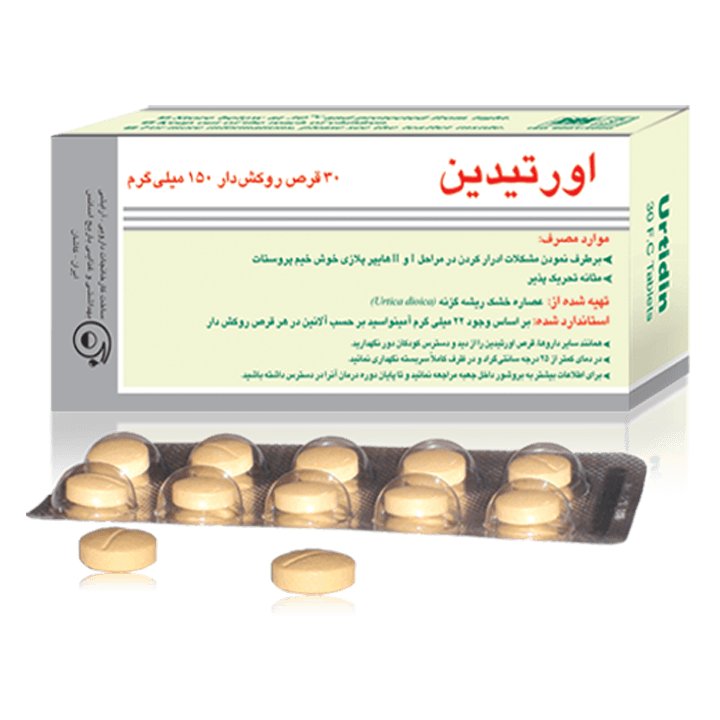
Benign prostatic hyperplasia is the most commonly reported disease in older men with obstructive and irritative symptoms. 80-50% of men over the age of 50 suffer from BPH symptoms. Typically, 1α inhibitor drugs and 5α-reductase inhibitors are used to improve the symptoms of BPH patients. Herbal medicines are also commonly used to treat this disease, and nettle is one of the most famous herbs in this case.
Nettle root contains a mixture of water-soluble and alcohol-soluble compounds, including lectins, phenols, sterols and lignins. The use of nettle root for prostate and irritable bladder complaints has been approved by the E Commission. According to this commission, the nettle root causes a decrease in residual urine and increased urine flow. Preparations from the nettle root for the treatment of urinary disorders in stages I and (Alken, 1973) II or stages II and Vahlensieck & Fabricius, 1996) III (Anonymous, 2003
Benign prostatic hyperplasia has been used to relieve the symptoms of enlarged prostate gland.
Pharmacological properties: in vitro experiments
Sex Hormone Binding Globulin (SHBG): Aqueous extract of the urine of the nettle, depending on the dose, inhibits the binding of this substance to the prostate membrane receptors. Polar libraries, such as secoisolariciresinol, interfere with steroids in the binding of SHBG. The proposed mechanisms are: 1. To change the blood level of free (active) steroid hormones by changing their position from the attachment sites to SHBG. 2. Preventing the reaction of prostate receptors with SHBG.
Response to the aromatase enzyme: There is strong evidence of the involvement of the nettle extract in the conversion of testosterone to estrogens. In vitro ethanolic extract of the nettle root inhibits androstenone digestion. It seems that the lipophilic components of the extract are involved in this.
Reaction with 5α-reductase enzyme: The only large amounts of methanolic extract of the nettle root cause 5α-reductase enzyme inhibition (4). Also, the erythropoietic extract of the nettle is very potent in inhibiting the 5α-reductase enzyme and the ethanolic extracts And blue are at the next level.
Anti-inflammatory effect: Inhibition of elastase The leukocytes of humans indicate anti-inflammatory effects. The ethanolic extract of the nettle root causes estradiol inhibition of cattle leukocytes. Methanol extracts and polysaccharide compounds of the nettle root inhibit the complementary pathway.
Effect on Prostate Cell Growth: The extract of the nettle root may suppress the growth and metabolism of the prostate by reacting with steroid receptors of the prostate membrane. Steroid compounds in the raw extract of the nettle root accelerate the movement of macrophages to the target site and help to anti-inflammatory effects. Also, steroids inhibit the activity of the Na + K + ATPase enzyme and thus inhibit the metabolism and growth of prostate cells.
Pharmacological Properties: In vivo Tests
Anti-inflammatory effect: The effect of edible extracts of nettle root and root components (especially polysaccharides) on rat's edema caused by carrageenan has been shown to have a potential anti-inflammatory effect. However, it should be seen that this effect is related to the effect of nettle root antiprostates.
Effect on Prostate Cell Growth: In dogs, treatment with nettle root extract over a period of 100 days reduced prostate size and serum testosterone levels.
Pharmacological studies in humans
Effects on sex hormones: In two unrelated studies, compared to placebo, there was a decrease in SHBG in the treatment of extract of root of nettle (1200 mg / day), however, Fischer and Wilbert (1992) increased 10% in testosterone concentration, 5 α -DHT and estradiol in a 7-month treatment period. In uncontrolled open-label studies, most estradiol and estrone interfere with the effect of the root of nettle to testosterone and DHT
Effect on Prostate Cell Growth: After treatment with nettle extract (600 mg / d), histological changes in prostate cells have been observed. After 9 weeks, changes have been reported as the death of glandular cells and inflammation (Streber, 1986). After 20 weeks of treatment with 1200 mg / day, changes have been reported as a reduction in cellular metabolism (Ziegler, 1982). (4)
Clinical studies
The first case report relates to the beneficial effects of tea from the root of the nettle to Rückle (1950), which has been considered as a side effect of the plant's diuretic. In 34 clinical studies, about 40,000 men with BPH have been treated with various products containing nettle root.
In a clinical trial with placebo control on 79 patients with BPH, the extract of the urticaria root (600 mg / day from extract 5: 1 for 8-6 weeks) in all parameters
Measured (urine flow, volume of urine and residual urine) was superior to placebo. In another similar trial, 50 patients with benign prostatic hyperplasia (I and II) treated with extracts of urticaria (600 mg / day from 5: 1 extract for 9 weeks) had a significant reduction in SHBG (p <0.0005) and Correction showed the amount of urine volume and maximum urinary flow.
To determine the therapeutic effects of urticaria on symptom improvement of lower urinary tract symptoms (LUTS) in benign prostatic hyperplasia, a randomized, semi-cross-over, placebo-controlled, 620-patient randomized, 6-month randomized, double-blind, prospective symptom score (IPSS), maximum urine flow rate (Qmax), urine output remaining urine (PVR), prostatic specific antigen
Saler Company Information