

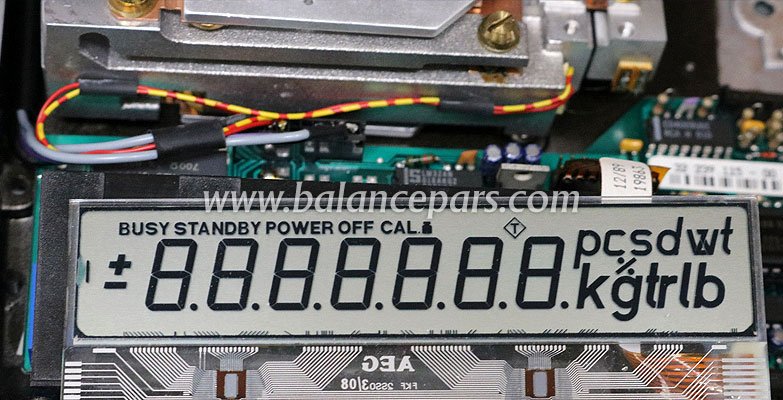
- Seen : 395 View
All balance screens are divided into two main types of offline and on-line. In terms of interior design, the screens are divided into two types of offline (digital) and (analog) on-line. These include:
A. (Digital) ON Line
In this type of display, which generally uses a processor instead of electronic circuits, the output wave of the sensors is sampled by a specific frequency D / A and is calculated by the amplitude and unbalanced phase numerical computation methods due to the transient time. These calculations periodically calculate and display the imbalance values periodically, depending on the sampling speed and the computational speed of the processor. Due to numerical calculation errors, inaccurate sampling frequency as well as effect Honing on maximizing sampling accuracy of this display Is within the range of 2.5 G. Also, due to the inaccuracy and consistency of the calculations, the interference of the unbalanced plates in this type of display can sometimes be increased up to 40%. On the other hand, due to inconsistency in the displayed values, it is possible to detect errors Not due to damage to bearings, double shaft spacing, sensor failure, etc. .. Among the popular types of this display can be Cab 720, Cab 920 made of Shank.
B- on line (Analog)
In these types of displays, most of the filtering and most of the off-balance calculations are done by the analog electronic system. And because of the lack of sampling system, offline display errors are not displayed on these displays. Also due to the consistency in the unbalanced values displayed, the defects of the device and the rotor are easily detectable by the operator. These displays are divided into filters in terms of the electronic systems used.
Types of Balance Display Devices From the beginning until now, there are three main filtering methods to increase accuracy in imbalance display. These methods and their advantages and disadvantages include:
A. Analog filtering
In this method, using low-pass analogue filters (from level 2 onwards), they remove unbalanced vibrations (received by vibrating sensors). This method is usually used in devices that require less precision (car wheel balances) because of their cheapness. Production is used. The maximum accuracy achieved by this model is the G25 display.
B - rectifier
This method uses the rectifier system to isolate (filter by) vibration sensors from other vibrations in the balancing device. The maximum sensitivity received from the monitor equipped with this system is maximum G 1.5. According to rectifier filtering system plates, these types of systems are not suitable for balancing rotors that have free or loose attachments. The cost of building these displays is higher than that of analog filtering systems.
C-Watt Metric
In this type of displays to determine the amount of unbalanced vibrations using specific electronic systems, the method of determining the energy of vibrations with arbitrary frequency is used. Due to the electronic systems used in this method, the accuracy of this type of display is precise. They are very high (G0 / 1) and cost a lot to build. This method does not have the disadvantages of a rectifier system.
Saler Company Information