
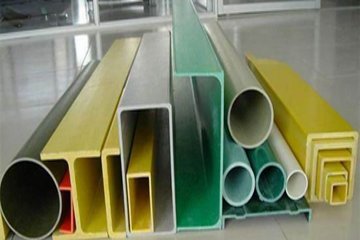
FRP / GRP profiles
  • Seen : 533 View

0
FRP / GRP profiles

The largest share of the composite market is in the construction industry. Composite profiles have been widely used in construction, especially the construction of coastal structures or structures located in corrosive climates. Expanding the technology of manufacturing these profiles can, in addition to meet the needs of the building industry, pave the way for the production of a variety of products in other industries such as sports, automobiles and so on.
Advantages of using composite profiles
The main reason for using FRP profiles inside concrete is to prevent corrosion and extend the life of the structure against vibration. Although the use of FRP profiles instead of metal specimens will also reduce the weight of the building, but in the use of these profiles the weight loss issue is of little importance compared to the two cases mentioned. The reason for the long life of the composites is their non-elastic properties. While the metallic materials are elastic, they absorb the energy absorbed. Therefore, composite materials will perform better against earthquake vibrations and will be the best option for structural resistance to seismic damage.
The use of FRP profiles in place of metal substantially avoids the damage caused by corrosion. The appearance of degradation due to the corrosion phenomenon in concrete reinforced with metal profiles is such that the metal rods inside the concrete first become corroded and oxidized. These oxides then migrate to the outer surface of the concrete and dissipate as they propagate inside the concrete. As a result of the corrosion of two metal components and structural concrete, the complete destruction of the concrete structure is provided. Past traditional methods, such as gluing metal plates onto structures or adding concrete thickness to counteract the phenomenon of corrosion while not eliminating the problem of metal corrosion, will also increase the weight of the structure and make it more vulnerable to earthquakes. This can be achieved by reinforcing the exterior surface of the concrete structure by composites and using FRP profiles inside the concrete, both to solve the problem of metal corrosion inside the structure and to prevent the performance of the structure from being damaged if the concrete is corroded. This is the best way to deal with the corrosion phenomenon in a concrete structure.
Our country has a great need for using composites in the form of composite profiles. At present, many structures eroded in corrosive environments in different parts of the country, such as the bridges of Lake Urmia or in buildings in the south of the country, which can be used as a composite solution to these problems.

Saler Company Information

Company : Asia Composite
Phone : 00982188106590
More Information : View
Online order registration form
No comments have been posted yet
loading
Your comment has been sent
FRP / GRP profiles

The largest share of the composite market is in the construction industry. Composite profiles have been widely used in construction, especially the construction of coastal structures or structures located in corrosive climates. Expanding the technology of manufacturing these profiles can, in addition to meet the needs of the building industry, pave the way for the production of a variety of products in other industries such as sports, automobiles and so on.
Advantages of using composite profiles
The main reason for using FRP profiles inside concrete is to prevent corrosion and extend the life of the structure against vibration. Although the use of FRP profiles instead of metal specimens will also reduce the weight of the building, but in the use of these profiles the weight loss issue is of little importance compared to the two cases mentioned. The reason for the long life of the composites is their non-elastic properties. While the metallic materials are elastic, they absorb the energy absorbed. Therefore, composite materials will perform better against earthquake vibrations and will be the best option for structural resistance to seismic damage.
The use of FRP profiles in place of metal substantially avoids the damage caused by corrosion. The appearance of degradation due to the corrosion phenomenon in concrete reinforced with metal profiles is such that the metal rods inside the concrete first become corroded and oxidized. These oxides then migrate to the outer surface of the concrete and dissipate as they propagate inside the concrete. As a result of the corrosion of two metal components and structural concrete, the complete destruction of the concrete structure is provided. Past traditional methods, such as gluing metal plates onto structures or adding concrete thickness to counteract the phenomenon of corrosion while not eliminating the problem of metal corrosion, will also increase the weight of the structure and make it more vulnerable to earthquakes. This can be achieved by reinforcing the exterior surface of the concrete structure by composites and using FRP profiles inside the concrete, both to solve the problem of metal corrosion inside the structure and to prevent the performance of the structure from being damaged if the concrete is corroded. This is the best way to deal with the corrosion phenomenon in a concrete structure.
Our country has a great need for using composites in the form of composite profiles. At present, many structures eroded in corrosive environments in different parts of the country, such as the bridges of Lake Urmia or in buildings in the south of the country, which can be used as a composite solution to these problems.

Saler Company Information

Company : Asia Composite
Phone : 00982188106590
More Information : View
Online order registration form