
- Seen : 632 View
Using accurate and correct nutritional strategies and providing a balanced combination of nutrients with the approach of achieving the maximum genetic potential of birds and realizing the goal of "economic nutrition"
The right balance of micronutrients, essential amino acids and electrolytes
Reducing nutritional stress
Economic improvement of the production index
The broiler breeding industry is a growing and changing industry, in the same way, the science of nutrition is constantly changing in a dynamic way. The changes and corrections made in the genetics of broiler chickens in the last few decades have caused the growth rate of broiler chickens to increase and on the other hand, the length of the rearing period has decreased significantly. Breeding plays an important role in expressing genetic potential, improving bird performance and increasing the productivity of breeding units.
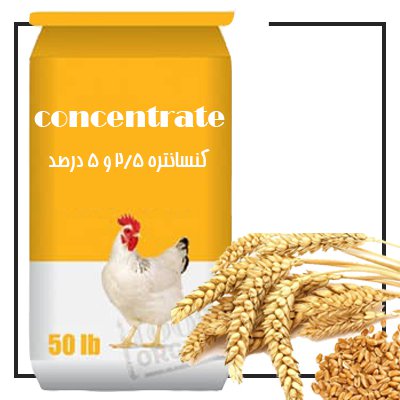
Concentrate 2.5 and 5%, increasing productivity by improving the growth pattern
One of the most suitable food rations for Beria Joha meat is a ration that, in addition to accurately meeting the body's needs, including nutrients, also meets the needs of different periods of growth and development, and also reduces nutritional costs and leads to economic management. .
As can be seen in the nutritional characteristics tables of Ross breed broilers (2014), nutritional requirements for broilers with different target weights are different:
The needs of broiler chickens with a live weight of less than 1.6 kg
The requirements of broilers with a live weight of 1.7 to 2.4 kg
The needs of broilers with a live weight of 2.5 to 3 kg
The needs of broilers with a live weight of 1.3 to 3.5 kg
The needs of broiler chickens with a live weight of 3.6 to 4 kg
As you can see, different target weights create different growth patterns, therefore the level of the body's needs for brain substances, vitamins and minerals will be different according to the desired growth pattern. The multi-stage feeding system is one of the most accurate and at the same time the most effective feeding methods to cover all the needs of birds with different growth patterns. In this method, you can easily prevent nutrient deficiency in breeding.
The importance of multi-stage nutrition
New management methods in the production of beef cattle have been explained in order to increase efficiency and productivity. Therefore, the use of a balanced feed that contains all the nutrients is one of the important factors in achieving the maximum genetic potential of the chicken and the appropriate and economic growth pattern, which has significant effects on productivity and overall economic efficiency.
Performance and feed efficiency in broilers are closely related to the growth pattern in birds. The level of this performance is also affected by various and complex factors such as the physiology of the bird, the amount of feed consumption and the nutritional requirements required for growth and maintenance and resistance to diseases. For this reason, following a feeding pattern may lead to a lack or excess of nutrients in birds. In the multi-stage feeding model, the product is designed in such a way that the supply of nutrients and the amount of feed consumption will be different according to the rearing conditions and different target weights.
Economic benefits
Broiler breeding depends on various factors such as nesting, feeding systems, drinking systems, disease control, etc. High quality feed by providing carbohydrates, minerals, proteins and vitamins from suitable sources and in exact amounts at each age plays an important role in completing each breeding period. The nutritional needs of broilers for proteins and amino acids change over time. One-stage feeding causes a number of nutrients to be provided in different days of the breeding period, more than the required amount of the bird, which, in addition to reducing the productivity and increasing the loss of nutrients, is a factor for increasing the metabolic pressure on the bird. Accurate estimation of needs with the aim of improving the balance of nutrients in the diet can be achieved with multi-stage feeding. Multi-stage feeding can reduce production costs by preventing excessive supply of certain nutrients.
2.5% and 5% concentrate yield
Due to the short duration of the broiler breeding period, in order to achieve the economic efficiency of the growth rate, a balanced combination of essential nutrients for growth should be provided, in 5.2 and 5% concentrate, with the management of the concentrate level and the correct formulation of the ration, the possibility of feeding management according to It is possible under different conditions. For example, taking into account that raw protein sources (such as soybean meal, etc.) are expensive and costly components of poultry diets, reducing the level of raw protein in diets during the breeding period until it reaches the optimal level of essential and limited amino acids. The do not harm grower plays an effective role in reducing feed costs (which constitute 60-70% of breeding costs). Also, reducing the level of raw protein prevents environmental pollution caused by the increase in nitrogen excretion of internal origin (endogenous) which is caused by the use of diets with high protein levels. The need is provided in different stages, the amount of feed consumption, the ratios between nutrients, etc.
Saler Company Information