Dominant water
  • Seen : 947 View

0
Dominant water

Dominant water, by definition, only contains H20, meaning that the H + and -OH ions are in equilibrium with each other. The electrical conductivity of this water is about 0.054 uS / cm at 250C which is also expressed as 18.3 Mohm resistance. Demineral water is mainly used in semiconductor and pharmaceutical industries. The process of obtaining demineral water is often carried out in two stages. For example, if the source of incoming raw water, municipal purified water or groundwater, the raw water is first purified by membrane or ion exchange processes for the purpose of obtaining a final EC of 10 uS / cm and then from the columns Mixed Bed Resin is processed with high performance or by an electrodiester.
Pharmaceutical Water - Dominant Water

Injectable water or what is called WFI - Dominant Water - is water used to produce pharmaceuticals and types of injectable products in which the amount of endotoxin needs to be controlled. Sometimes this water is used for washing equipment or assemblies in contact with injectable products, at least the quality of water supplies for injection water, potable water based on US, European and Japanese pharmacopoeia or WHO definitions.

Feeding water goes through the necessary processes and, after preparation, enters the distillation system or other approved systems in its next phase. The outlet must have all the chemical properties of pure water, plus the bacterial endotoxin. US Pharmacopoeia Injectable Water Production Monograph (USP) has for the past few years endorsed its method of extraction through distillation or equivalent methods or superior processes.
Injectable Water Production Methods (WFI)

International standards in the field of drug production Despite the many similarities and similarities, there are still many differences. Injectable water in accordance with the USP standard can be obtained through a variety of irrigation methods.

Japanese Pharmacopoeia confirms the possibility of producing injectable water by distillation, reverse osmosis and ultrafiltration. But European Pharmacopoeia only accepts distillation for this product, traditionally distillation used in the biopharmaceutical industry, and today most injectable medicinal water is obtained by distillation. However, some high purity water companies use deionization and ultrafiltration methods to produce injectable or higher quality water, and distillation is not used for production, and most industries are limited in doing so. They don't.

Distillation:

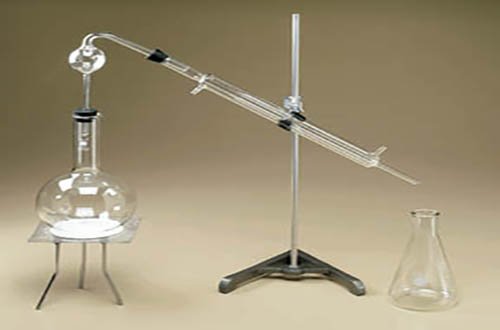
According to USP requirements, injectable water - demineralized water - must be obtained by distillation or a purification method that is above or above the distillation. It should also undergo TOC and condensate tests, and its bacterial endotoxin level should be below 0.25 (ml) units of endotoxin. The microbial contamination level should not be higher than 10 cfu per 100 mm. The distillation method can provide distilled water with a low contamination level along with its endotoxin removal.

The steam compression distillation system comprises two series of softeners, heat exchangers, activated carbon filters, a 5μm initial microfilter, an optional reverse osmosis system with the possibility of applying hot water for cleaning and washing, and a final steam compression distillation system. The condensation distillation system also has the following advantages if it has the characteristics required by the various pharmacopoeias in question.

* Operation is usually continuous and stable

* More energy efficient than alternate distillation

* No need for sophisticated design

* Almost low maintenance

Although distillation systems may be stable. But this accuracy and stability does not guarantee their product and may produce pyrogenic water when the system is malfunctioning or mechanically malfunctioning when high endotoxin-fed water enters The system will shut down and depending on the water supply method the endotoxin tests may show an error.

Steam-distillation systems require high energy and cost over their lifecycle compared to membrane systems.

These systems require either reverse osmosis (RO) or reverse osmosis with deionized water (RO / deionization) to feed themselves, and these complexes require more manpower than the distillation system in multistage distillers. . Multi-stage distillers (MEDs) usually include Multi Media Filter, dual softener water, heat exchanger break tank, hot carbon filter, 5µs microfilter, PH adjustment systems, 254 nm UV irradiation devices, hot water scavenging reverse osmosis (formerly often used as cation and anionic columns for ionization) and continuous ionization electrodes (CEDIs) which eventually gave the device Multistage distillation (MED) results.

In addition to estimating the requirements of different pharmacopoeias, multi-stage distillation has other strengths, which include stability and stability in the production and lack of moving parts. But the disadvantages of these systems are:

* Requirement of high quality feed water and chloride at 0.5 ppm, necessity of less than 1ppm silica content and conductivity less than 5 microS per cm (µs / cm)

* High energy consumption compared to condensed steam distillation

* High cost of operation cycle compared to membrane systems

* Vulnerability to the entry of endotoxins

Saler Company Information

Company : Absun Zolal
Phone : 00982123568
More Information : View
Online order registration form
No comments have been posted yet
loading
Your comment has been sent
Dominant water

Dominant water, by definition, only contains H20, meaning that the H + and -OH ions are in equilibrium with each other. The electrical conductivity of this water is about 0.054 uS / cm at 250C which is also expressed as 18.3 Mohm resistance. Demineral water is mainly used in semiconductor and pharmaceutical industries. The process of obtaining demineral water is often carried out in two stages. For example, if the source of incoming raw water, municipal purified water or groundwater, the raw water is first purified by membrane or ion exchange processes for the purpose of obtaining a final EC of 10 uS / cm and then from the columns Mixed Bed Resin is processed with high performance or by an electrodiester.
Pharmaceutical Water - Dominant Water

Injectable water or what is called WFI - Dominant Water - is water used to produce pharmaceuticals and types of injectable products in which the amount of endotoxin needs to be controlled. Sometimes this water is used for washing equipment or assemblies in contact with injectable products, at least the quality of water supplies for injection water, potable water based on US, European and Japanese pharmacopoeia or WHO definitions.

Feeding water goes through the necessary processes and, after preparation, enters the distillation system or other approved systems in its next phase. The outlet must have all the chemical properties of pure water, plus the bacterial endotoxin. US Pharmacopoeia Injectable Water Production Monograph (USP) has for the past few years endorsed its method of extraction through distillation or equivalent methods or superior processes.
Injectable Water Production Methods (WFI)

International standards in the field of drug production Despite the many similarities and similarities, there are still many differences. Injectable water in accordance with the USP standard can be obtained through a variety of irrigation methods.

Japanese Pharmacopoeia confirms the possibility of producing injectable water by distillation, reverse osmosis and ultrafiltration. But European Pharmacopoeia only accepts distillation for this product, traditionally distillation used in the biopharmaceutical industry, and today most injectable medicinal water is obtained by distillation. However, some high purity water companies use deionization and ultrafiltration methods to produce injectable or higher quality water, and distillation is not used for production, and most industries are limited in doing so. They don't.

Distillation:

According to USP requirements, injectable water - demineralized water - must be obtained by distillation or a purification method that is above or above the distillation. It should also undergo TOC and condensate tests, and its bacterial endotoxin level should be below 0.25 (ml) units of endotoxin. The microbial contamination level should not be higher than 10 cfu per 100 mm. The distillation method can provide distilled water with a low contamination level along with its endotoxin removal.

The steam compression distillation system comprises two series of softeners, heat exchangers, activated carbon filters, a 5μm initial microfilter, an optional reverse osmosis system with the possibility of applying hot water for cleaning and washing, and a final steam compression distillation system. The condensation distillation system also has the following advantages if it has the characteristics required by the various pharmacopoeias in question.

* Operation is usually continuous and stable

* More energy efficient than alternate distillation

* No need for sophisticated design

* Almost low maintenance

Although distillation systems may be stable. But this accuracy and stability does not guarantee their product and may produce pyrogenic water when the system is malfunctioning or mechanically malfunctioning when high endotoxin-fed water enters The system will shut down and depending on the water supply method the endotoxin tests may show an error.

Steam-distillation systems require high energy and cost over their lifecycle compared to membrane systems.

These systems require either reverse osmosis (RO) or reverse osmosis with deionized water (RO / deionization) to feed themselves, and these complexes require more manpower than the distillation system in multistage distillers. . Multi-stage distillers (MEDs) usually include Multi Media Filter, dual softener water, heat exchanger break tank, hot carbon filter, 5µs microfilter, PH adjustment systems, 254 nm UV irradiation devices, hot water scavenging reverse osmosis (formerly often used as cation and anionic columns for ionization) and continuous ionization electrodes (CEDIs) which eventually gave the device Multistage distillation (MED) results.

In addition to estimating the requirements of different pharmacopoeias, multi-stage distillation has other strengths, which include stability and stability in the production and lack of moving parts. But the disadvantages of these systems are:

* Requirement of high quality feed water and chloride at 0.5 ppm, necessity of less than 1ppm silica content and conductivity less than 5 microS per cm (µs / cm)

* High energy consumption compared to condensed steam distillation

* High cost of operation cycle compared to membrane systems

* Vulnerability to the entry of endotoxins

Saler Company Information

Company : Absun Zolal
Phone : 00982123568
More Information : View
Online order registration form