
- Seen : 1173 View
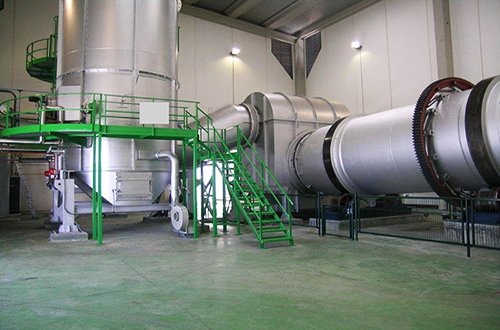
Waste incinerator - Waste incinerator is another solution for waste disposal that has been common in advanced industrialized countries for many years. The role of incinerators becomes more apparent when it comes to the disposal of hazardous waste and hospital waste. Waste incinerators are defined as units that by heat oxidize waste and reduce carbon emissions.
Outputs from waste incinerators, carbon dioxide, water, ash and combustion heat. In addition, air pollutants such as sulfur and nitrogen gas compounds and various halogens and heavy metals (such as cadmium, mercury, etc.) are other combustion products. In some cases, waste incineration is one of the most appropriate waste management practices. Waste incinerators are divided into the following two general categories, each containing different systems.
Solid waste generates a lot of ash - during combustion - and that is why the waste combustion chamber must dump ash for amounts of waste above 90Kg / h. Suitable for low amounts of fixed waste incinerator waste, and for amounts above 300Kg / h, a Rotary Kiln, Moving Grate or Fluidized bed is used.
For solid waste, when the heat value is high, a Rotary Kiln incinerator is a good option. R.K incinerators are commonly used for hospital and hazardous waste.
For solid wastes where the calorific value is low, a grate type incinerator is appropriate. This type of incinerator is more commonly used for household waste. If hospital waste is incinerated in this incinerator, hot spots can be created and may be damaged, which is why they have a separate feed line for waste. With high calorific value, that's the case.
Therefore, the grate type incinerator was not able to supply high temperatures and therefore the R.K incinerator is used for high-risk waste and hospital waste.
For solid waste, when the density is low, as well as homogenous waste, using a Fluidized bed incinerator is a good solution. These types of waste incinerators are commonly used to incinerate sludge.
Waste incinerator installation history:
Waste incinerators are one of the oldest and most reliable methods of waste disposal. Currently, more than 143 million tonnes of waste worldwide are incinerated in incinerators annually, of which more than 80 million tonnes are burned, more than 40 million tonnes of RDF. The capacity of incinerators is more than 4,000 MW.
- Europe, the US and Japan have the highest installations.
- The United States has banned the installation of burners since 2004, but has recently planned to build 10,000 megawatts for the next 13 years.
- Although in the past most incinerators were installed to dispose of waste, electricity and heat production from them has grown sharply since previous years. For example, Japan plans to increase its capacity by 1600 megawatts to 1,660 megawatts by adding up to 1,900 incinerators by 2010.
Waste Incinerator Features:
ـ Contains municipal waste, industrial and hospital waste, and often hazardous waste. Some waste-incineration systems are capable of removing sewage sludge.
Unable to eliminate construction debris and non-combustible materials.
قوی Requires strong filtration systems due to the production of dioxins and eruptions and the presence of heavy metals and the need to refine the exhaust fumes, thus becoming much less environmentally friendly and less hazardous.
ـ Capacity to generate electricity and heat that can be used to dry leachate or thermal applications or to dry waste entry into the incinerator.
Space needed to build more than the plasma system.
10 Maximum 10% waste
The need for separation of waste, especially glass and metals, is very serious and sensitive.
There are several types of waste incinerators in the world that are ranked first of all.
The cost of initial investment and maintenance is high, and the cost of separation and waste processing is also significant.
Benefits of waste incinerator:
ـ Reduce the volume of waste
Rapid reduction of waste volume
ـ Disposal of hazardous waste
ـ Reduce maintenance and disposal costs
Eliminate the risk of contamination of surface water
ـ Reduce odor
ـ Reduce greenhouse gas emissions
ـ Reduce the amount of air pollutants
Destruction of vermin habitat
ـ Reduce the need for land for burial
Saler Company Information