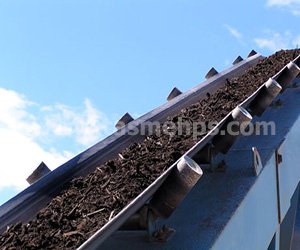
Conveyor belt
  • Seen : 672 View

0
Conveyor belt

Conveyor belt with rubber sheeting and glued layers in different thicknesses and with

The number of guards in terms of thickness and strength of the conveyor in the mining industry, including: sand,

Cement, plaster, brick, tiling and so on. Rubber conveyor belt

The simplest is the thickness of 3, 5, 6, 8, 10, which is used in industries and mines

Including gypsum, cement, brick, sand, and flour mills

Refer to conveyor belt 3 mill bits, belt conveyor belt 5 and 6 mm 2 layers

The belt conveyor belt 8 and 10 mm have 3 layers. Of course tape

Other cones of higher thickness and more are known as Cutter Pillars. Tires

The top of the conveyor belts is the part where the material is placed on

The shapes are smooth, porous (grapheme) V-shaped. The thickness of the rubber coated down

The conveyor belts are smaller than the bottom layer. The length and thickness of this layer from the strap

The conveyor should be fitted to the type of carrying materials and working conditions of the belt. In belt production

Conveyor is the most important principle of quality of the final stage of its production. Conveyor belt

Anti-wearing rubber: The coating of this type of conveyor belt is resistant to rubber

Abrasion resistant is designed to use this conveyor belt for carrying

Loads that have high wear resistance and dissolving materials. And also

Resists the possible impact of the carrier. A conveyor belt type

Food and flour mills are used which are smaller but more powerful

It is said that the lifting straps are said to be usually 6 or 6 inches thick

7 miles but its EP is EP 800 or EP1000. From this type of conveyor belt

Lifting with a paddle for lifting food items such as flour, seeds

Oil and so on. Note: Ideal place to hold conveyor belt, low temperature, light

And the environment without moisture.

Saler Company Information

Company : Pishro Sanat Trading
More Information : View
Online order registration form
No comments have been posted yet
loading
Your comment has been sent
Conveyor belt

Conveyor belt with rubber sheeting and glued layers in different thicknesses and with

The number of guards in terms of thickness and strength of the conveyor in the mining industry, including: sand,

Cement, plaster, brick, tiling and so on. Rubber conveyor belt

The simplest is the thickness of 3, 5, 6, 8, 10, which is used in industries and mines

Including gypsum, cement, brick, sand, and flour mills

Refer to conveyor belt 3 mill bits, belt conveyor belt 5 and 6 mm 2 layers

The belt conveyor belt 8 and 10 mm have 3 layers. Of course tape

Other cones of higher thickness and more are known as Cutter Pillars. Tires

The top of the conveyor belts is the part where the material is placed on

The shapes are smooth, porous (grapheme) V-shaped. The thickness of the rubber coated down

The conveyor belts are smaller than the bottom layer. The length and thickness of this layer from the strap

The conveyor should be fitted to the type of carrying materials and working conditions of the belt. In belt production

Conveyor is the most important principle of quality of the final stage of its production. Conveyor belt

Anti-wearing rubber: The coating of this type of conveyor belt is resistant to rubber

Abrasion resistant is designed to use this conveyor belt for carrying

Loads that have high wear resistance and dissolving materials. And also

Resists the possible impact of the carrier. A conveyor belt type

Food and flour mills are used which are smaller but more powerful

It is said that the lifting straps are said to be usually 6 or 6 inches thick

7 miles but its EP is EP 800 or EP1000. From this type of conveyor belt

Lifting with a paddle for lifting food items such as flour, seeds

Oil and so on. Note: Ideal place to hold conveyor belt, low temperature, light

And the environment without moisture.

Saler Company Information

Company : Pishro Sanat Trading
More Information : View
Online order registration form