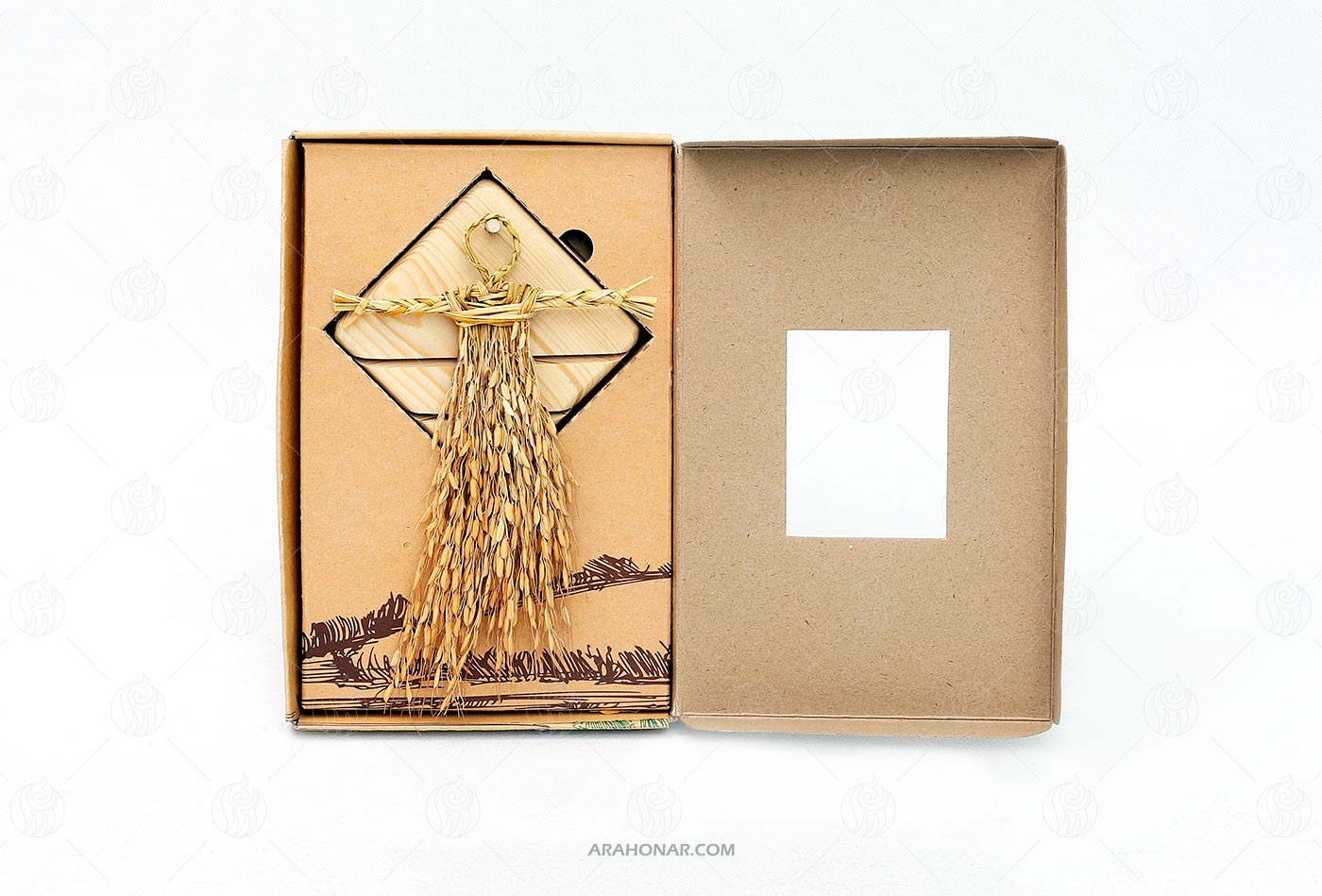
Varzamashte (brass doll and wooden key holder)
  • Seen : 981 View

0
Varzamashte (brass doll and wooden key holder)

Varzamashte (brass doll and wooden key holder) is a different advertising gift. A collection that contains a beautiful tradition of the people of Gilan.

Your choice of Varzamashte (brass doll and wooden key holder) as a promotional gift can satisfy any taste.
History of Verzamashte

In ancient times, the people of Gilan used to get help from Verza to prepare vast and swampy lands for planting rice.

Varza was the only powerful animal that had the ability to plow hectares of land with a wooden tool called pishgawl. For this reason, this culture is formed among the people that it is time to harvest rice; In this sense, the villagers helped each other and harvested the farmer's rice crop.

Everyone was harvesting the last handful of rice from the field. He would shout with joy and announce that I took the last punch and run towards the owner of the farm. He would hand over the last handful and say, give me the good news that this year's rice will also be fruitful.

This joy and celebration was due to the fruitfulness after the difficulty of planting and the stages of reaching the harvest. The owner of the land kept this handful of rice as a symbol of good and blessing.
Houses with daughters

This symbol was also decorated in the houses where there was a girl. And for example, it was hung in the porch of the house as a decoration around the lamp. so that others know that a classy single girl lives in this house.

This symbol would remain for a year until the land was to be ready for planting again. During a ceremony, it was given to a cow (varza) in gratitude for helping; Because if it wasn't for him, there wouldn't be a product.

The ceremony was like this, first thing in the morning, the man of Varza's house takes him to the farm. And symbolically, he would show the land to the cow and say that you should prepare this land for me. then they would return home; where the housewife was waiting for them to perform the ceremony.

When the cow entered the yard, the woman had prepared the tools of the ceremony: a copper tian full of water, boxwood leaves, orange leaves, walnuts, hazelnuts, an orange tray, henna and a mirror. The woman would thank the cow with a song for making the land fertile and ask him to try again so that they have a good rice crop this year.

Meanwhile, henna is applied to the cow's forehead so that no one sees the cow. A mirror was hung on its horn, which is a symbol of light. And he puts an orange on his head, which is a symbol of fertility. Hazelnuts and walnuts symbolized that their rice grains would become hard and dense like these two nuts.

Shamshad leaves and orange leaves were symbols of the native evergreen trees of Gilan. which was used in this ceremony for the purpose of green and fertile rice stalks. All this was due to the fact that the sensitivity of rice seedlings to reach the weeding stage is very high and it is exposed to destruction by any factor.

The cow eats the water inside the tea tree and the leaves of boxwood and orange, and at the end they give a handful of varza to the cow as a token of gratitude. They gave the seeds spilled from Verzamashte to the chickens so that they too would be healthy and blessed. This product can be a very suitable promotional gift in support of Iranian culture and handicrafts.

Saler Company Information

Company : Ara Honar Fakher Irani
Mobile : 00989220167904
Phone : 00982188930148
More Information : View
Online order registration form
No comments have been posted yet
loading
Your comment has been sent
Varzamashte (brass doll and wooden key holder)

Varzamashte (brass doll and wooden key holder) is a different advertising gift. A collection that contains a beautiful tradition of the people of Gilan.

Your choice of Varzamashte (brass doll and wooden key holder) as a promotional gift can satisfy any taste.
History of Verzamashte

In ancient times, the people of Gilan used to get help from Verza to prepare vast and swampy lands for planting rice.

Varza was the only powerful animal that had the ability to plow hectares of land with a wooden tool called pishgawl. For this reason, this culture is formed among the people that it is time to harvest rice; In this sense, the villagers helped each other and harvested the farmer's rice crop.

Everyone was harvesting the last handful of rice from the field. He would shout with joy and announce that I took the last punch and run towards the owner of the farm. He would hand over the last handful and say, give me the good news that this year's rice will also be fruitful.

This joy and celebration was due to the fruitfulness after the difficulty of planting and the stages of reaching the harvest. The owner of the land kept this handful of rice as a symbol of good and blessing.
Houses with daughters

This symbol was also decorated in the houses where there was a girl. And for example, it was hung in the porch of the house as a decoration around the lamp. so that others know that a classy single girl lives in this house.

This symbol would remain for a year until the land was to be ready for planting again. During a ceremony, it was given to a cow (varza) in gratitude for helping; Because if it wasn't for him, there wouldn't be a product.

The ceremony was like this, first thing in the morning, the man of Varza's house takes him to the farm. And symbolically, he would show the land to the cow and say that you should prepare this land for me. then they would return home; where the housewife was waiting for them to perform the ceremony.

When the cow entered the yard, the woman had prepared the tools of the ceremony: a copper tian full of water, boxwood leaves, orange leaves, walnuts, hazelnuts, an orange tray, henna and a mirror. The woman would thank the cow with a song for making the land fertile and ask him to try again so that they have a good rice crop this year.

Meanwhile, henna is applied to the cow's forehead so that no one sees the cow. A mirror was hung on its horn, which is a symbol of light. And he puts an orange on his head, which is a symbol of fertility. Hazelnuts and walnuts symbolized that their rice grains would become hard and dense like these two nuts.

Shamshad leaves and orange leaves were symbols of the native evergreen trees of Gilan. which was used in this ceremony for the purpose of green and fertile rice stalks. All this was due to the fact that the sensitivity of rice seedlings to reach the weeding stage is very high and it is exposed to destruction by any factor.

The cow eats the water inside the tea tree and the leaves of boxwood and orange, and at the end they give a handful of varza to the cow as a token of gratitude. They gave the seeds spilled from Verzamashte to the chickens so that they too would be healthy and blessed. This product can be a very suitable promotional gift in support of Iranian culture and handicrafts.

Saler Company Information
Company : Ara Honar Fakher Irani
Mobile : 00989220167904
Phone : 00982188930148
More Information : View
Online order registration form