Rice
  • Seen : 533 View

0
Rice

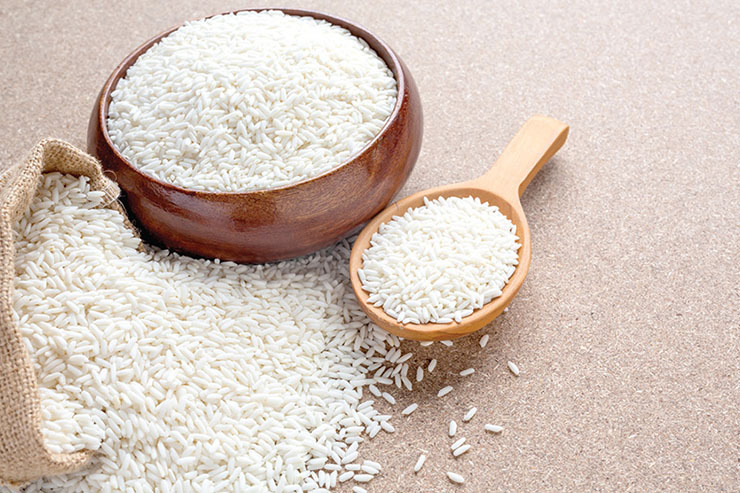
After wheat, sorghum is considered the second most important grain in the world. Rice grain and its products make up almost 40% of the food needed by half of the world's people and it is considered a popular food in our country. Rice belongs to the wheat family and has annual and perennial varieties. The main color of rice when it is in the shell is brown and it is called brown rice. In order to obtain white rice, rice grains are poured into special devices and these devices separate the outer shell of the rice from it, and then by rubbing the rice without the shell with each other, its outer membrane is also destroyed and the rice becomes White and transparent color is obtained.
● Inside the rice

The outermost layer of rice is the paddy, which is very hard and clear. The skin of the seed is placed under this part, which is rich in protein and fat, but poor in starch. After the skin, there are rice grains.
The main composition of rice is starch, which is mainly located in the grain. Rices that have more starch give more glaze and their expansion is less during cooking. Rice is very rich in nutrients. When the brown skin is removed, it loses some of its vitamins. The amount of vitamin 1 B in white rice is one sixth, vitamin 2 B is half, and vitamin 3 B is one third of brown rice, and its minerals are greatly reduced. In 100 grams of white rice, there are 362 calories, 12 grams of water, 6.6 grams of protein, 80 grams of starch, 25 milligrams of calcium and 95 milligrams of phosphorus. In rice, there is a substance called uridine, which has anti-neuro-inflammatory properties. Rice does not contain gluten.
● Types of rice

There are about 7000 different types of rice in the world. The two main types of rice are identified based on appearance. The type whose grain is elongated and narrow is known as Sadri rice, and the other type whose grain is small and round is known as Chinese or Japanese rice. The type of rice that Iranians and people of most countries consume is rice that has been removed from paddy and its outer shell.
● 10 properties of rice

1) Rice does not contain fat, cholesterol, gluten and sodium and is very easy to digest.
2) Brown rice has anti-neuroinflammatory properties.
3) Rice increases sleep.
4) Consuming rice quenches thirst.
5) Rice diet is useful for kidney disorders.
6) Eating rice reduces stomach and intestinal irritations.
7) Rice is not a rich source of protein, but its protein quality is higher than other grains.
8) Consumption of brown rice is very useful in reducing heart diseases.
9) Consuming rice (without salt and oil) reduces blood fat and lowers blood pressure.
10) Rice bran is very useful for increasing stomach and intestinal movements and relieving constipation.

Saler Company Information

Company : Vira Pardis Ara
Phone : 00982188769793
More Information : View
Online order registration form
No comments have been posted yet
loading
Your comment has been sent
Rice

After wheat, sorghum is considered the second most important grain in the world. Rice grain and its products make up almost 40% of the food needed by half of the world's people and it is considered a popular food in our country. Rice belongs to the wheat family and has annual and perennial varieties. The main color of rice when it is in the shell is brown and it is called brown rice. In order to obtain white rice, rice grains are poured into special devices and these devices separate the outer shell of the rice from it, and then by rubbing the rice without the shell with each other, its outer membrane is also destroyed and the rice becomes White and transparent color is obtained.
● Inside the rice

The outermost layer of rice is the paddy, which is very hard and clear. The skin of the seed is placed under this part, which is rich in protein and fat, but poor in starch. After the skin, there are rice grains.
The main composition of rice is starch, which is mainly located in the grain. Rices that have more starch give more glaze and their expansion is less during cooking. Rice is very rich in nutrients. When the brown skin is removed, it loses some of its vitamins. The amount of vitamin 1 B in white rice is one sixth, vitamin 2 B is half, and vitamin 3 B is one third of brown rice, and its minerals are greatly reduced. In 100 grams of white rice, there are 362 calories, 12 grams of water, 6.6 grams of protein, 80 grams of starch, 25 milligrams of calcium and 95 milligrams of phosphorus. In rice, there is a substance called uridine, which has anti-neuro-inflammatory properties. Rice does not contain gluten.
● Types of rice

There are about 7000 different types of rice in the world. The two main types of rice are identified based on appearance. The type whose grain is elongated and narrow is known as Sadri rice, and the other type whose grain is small and round is known as Chinese or Japanese rice. The type of rice that Iranians and people of most countries consume is rice that has been removed from paddy and its outer shell.
● 10 properties of rice

1) Rice does not contain fat, cholesterol, gluten and sodium and is very easy to digest.
2) Brown rice has anti-neuroinflammatory properties.
3) Rice increases sleep.
4) Consuming rice quenches thirst.
5) Rice diet is useful for kidney disorders.
6) Eating rice reduces stomach and intestinal irritations.
7) Rice is not a rich source of protein, but its protein quality is higher than other grains.
8) Consumption of brown rice is very useful in reducing heart diseases.
9) Consuming rice (without salt and oil) reduces blood fat and lowers blood pressure.
10) Rice bran is very useful for increasing stomach and intestinal movements and relieving constipation.

Saler Company Information
Company : Vira Pardis Ara
Phone : 00982188769793
More Information : View
Online order registration form