

- Seen : 402 View
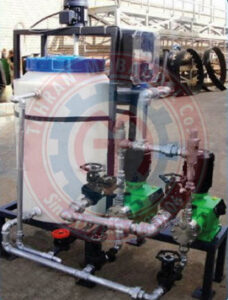
Chlorination has a wide application in the water and wastewater treatment industry, and currently, among disinfectants, the use of chlorine for disinfection is the most common method in the world, including our country, due to its cheapness, germicidal power, and relatively good retention effect. be Chlorine can be used as gas or liquid. Chlorine is a dangerous gas and working with it requires the necessary precautions, and since chlorine is a poisonous, irritating gas and its permissible limit in inhaled air is equal to 3 mg per cubic meter (according to TLV standards), it is suffocating for humans. And breathing chlorine gas in a large amount causes severe poisoning and sometimes death, therefore, the use of gaseous chlorine must be done according to certain safety rules to avoid the possible occurrence of accidents and side risks caused by gas leakage in the work environment and the environment. Therefore, the use of liquid chlorine system is more recommended due to its advantages.
Applications of chlorination system:
- Disinfection of water and sewage
- Taste, odor and color removal control
- Oxidation of ammonia, iron, manganese and sulfide as well as removal of BOD in water and wastewater
"Dosing pumps" or "metering pumps" are capable of pumping (injecting) a precise amount (specified dose) of a fluid. Therefore, they are also called "injection pumps". It should be noted that the flow rate of these pumps can be adjusted and they perform the injection process according to the line pressure. The drive of these pumps is electric (electromotor), solenoid (electromagnetic), hydraulic or pneumatic. It is important to note that in centrifugal pumps, the flow rate changes with the change in pressure, so they are not suitable for use as a dosing pump. Dosing pumps in piston, diaphragm and diaphragm piston types with different raw materials such as (PP, PVC,
PVDF, PE, S.S316) suitable for all kinds of acids, bases and chemicals, viscous materials and slurries are produced.
Saler Company Information