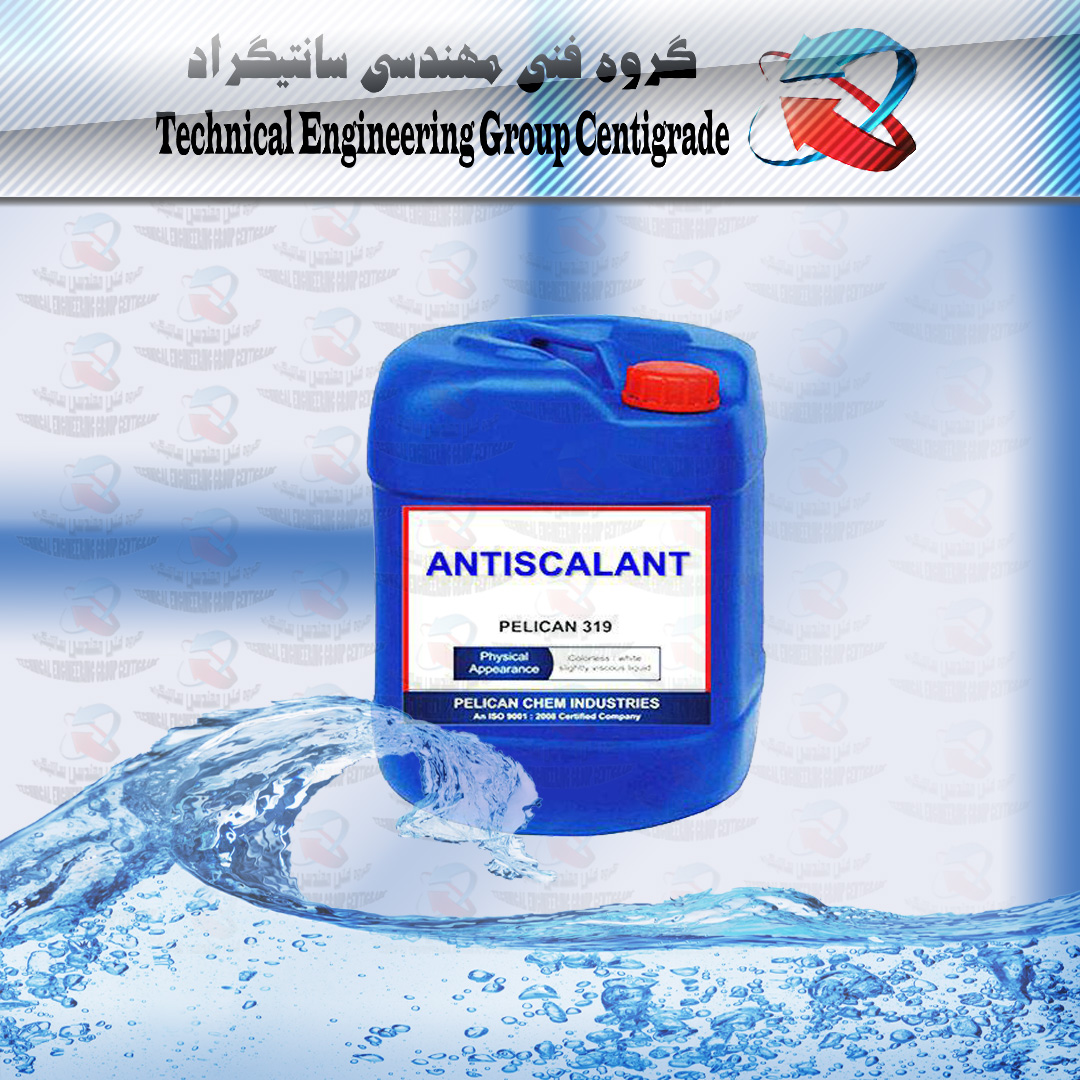
Anti-scalant
  • Seen : 471 View

0
Anti-scalant

Over time, due to the presence of soluble salts in the water entering the RO system, the places where the water passes through the membrane become blocked and the so-called sediment is formed. In order to prevent these deposits on the membranes, an appropriate dose of Green Power antiscalant is injected into the water entering the RO system. The application of this product is for industrial uses (industrial membranes) of hard water and normal water.
What is Green Power's anti-scalant or anti-scaling agent (R.O. Scale Inhibitor)?
Any membrane system, such as the RO system, naturally becomes clogged due to the presence of suspended substances, soluble salts and microbial parameters in the feed water, which necessitates the correct physical and chemical pretreatment of the system. The sedimentation process consists of The deposition of low soluble salts on the membrane surface and fouling is the accumulation of suspended solids and microorganisms on the membrane surface. Fouling in RO systems is considered a natural phenomenon that can be controlled by suitable pre-treatment and filtration and chemical washing when needed. Anti-scaling, chemical layering (scaling) caused by water-soluble mineral compounds such as calcium carbonate (CaCO3). , calcium sulfate (CaSO4), silica (SiO2) or silicon dioxide, barium sulfate (BaSO4) and... can limit the working efficiency of membrane filtration systems, increase pressure and, as a result, increase energy consumption and related costs, reduce quality Obtained water, washes and frequent breakdowns. It should be noted that the useful life of membrane filters is reduced due to phenomena such as chemical layering (scaling).
Types of industrial water purification methods
1- Water purification by ion exchange method: In this method, ion exchange is used to harden water and produce high grade pure water.
2- Water purification by filtration method: Filtration methods include microfiltration, ultrafiltration and nanofiltration, the purpose of which is to separate organic components and soluble solutes in water to produce pure water.
3- EDI water purification: This method is a combination of ion exchange and membrane filtration.
4- EDR (reverse electrodialysis) water purification: In this method, mineral salts are removed using DC current and anionic and cationic membranes.
5- Water purification using the RO reverse osmosis system: Due to the advancement of technology, today's industries use the reverse osmosis system to purify the water used in their various departments, which we will explain below. The most important feature of reverse osmosis water purification is its high efficiency and lower cost compared to old methods.

Saler Company Information

Company : Celsius Engineering Technical Group
More Information : View
Online order registration form
No comments have been posted yet
loading
Your comment has been sent
Anti-scalant

Over time, due to the presence of soluble salts in the water entering the RO system, the places where the water passes through the membrane become blocked and the so-called sediment is formed. In order to prevent these deposits on the membranes, an appropriate dose of Green Power antiscalant is injected into the water entering the RO system. The application of this product is for industrial uses (industrial membranes) of hard water and normal water.
What is Green Power's anti-scalant or anti-scaling agent (R.O. Scale Inhibitor)?
Any membrane system, such as the RO system, naturally becomes clogged due to the presence of suspended substances, soluble salts and microbial parameters in the feed water, which necessitates the correct physical and chemical pretreatment of the system. The sedimentation process consists of The deposition of low soluble salts on the membrane surface and fouling is the accumulation of suspended solids and microorganisms on the membrane surface. Fouling in RO systems is considered a natural phenomenon that can be controlled by suitable pre-treatment and filtration and chemical washing when needed. Anti-scaling, chemical layering (scaling) caused by water-soluble mineral compounds such as calcium carbonate (CaCO3). , calcium sulfate (CaSO4), silica (SiO2) or silicon dioxide, barium sulfate (BaSO4) and... can limit the working efficiency of membrane filtration systems, increase pressure and, as a result, increase energy consumption and related costs, reduce quality Obtained water, washes and frequent breakdowns. It should be noted that the useful life of membrane filters is reduced due to phenomena such as chemical layering (scaling).
Types of industrial water purification methods
1- Water purification by ion exchange method: In this method, ion exchange is used to harden water and produce high grade pure water.
2- Water purification by filtration method: Filtration methods include microfiltration, ultrafiltration and nanofiltration, the purpose of which is to separate organic components and soluble solutes in water to produce pure water.
3- EDI water purification: This method is a combination of ion exchange and membrane filtration.
4- EDR (reverse electrodialysis) water purification: In this method, mineral salts are removed using DC current and anionic and cationic membranes.
5- Water purification using the RO reverse osmosis system: Due to the advancement of technology, today's industries use the reverse osmosis system to purify the water used in their various departments, which we will explain below. The most important feature of reverse osmosis water purification is its high efficiency and lower cost compared to old methods.

Saler Company Information

Company : Celsius Engineering Technical Group
More Information : View
Online order registration form