

- Seen : 848 View
Pharmacokinetics
Absorption: Variable subcutaneous injection.
Spread: Broadly linked to lipoproteins, globulins and fibrinogen. It does not pass through the pairs.
Metabolism: Although the metabolism of this drug is not well defined, it appears to be taken from the blood by the reticulo-anthothelial system and some of its metabolism is also done in the liver.
Disposal: There is little information on how to dispose of the drug. A small amount of it is unchanged in the urine. This drug is not secreted in milk. Its plasma life is between 1 and 2 hours.
Indications:
• Deep vein thrombosis, pulmonary embolism
• Prevention of embolism, post-MI, cerebral thrombosis following stroke, left ventricular thrombosis
• Consumption in open heart surgery
• Intravascular coagulation
• Retain intravenous catheters
• Unstable angina
• Anticoagulant effects in blood transfusion and blood samples
prohibited usage:
Active bleeding accompanied by bleeding or discoloration, or bleeding like hemophilia, thrombotic cytopenia, or liver disease with a small amount of blood prothrombin, suspicious cases of intracranial bleeding, perinatal thrombophlebitis, inaccessible ulcerative lesions (especially in the gastrointestinal tract), injuries injured Open, wide skin loss, ascorbic acid deficiency and other cases that cause capillary permeability. Induced acute bacterial cardiopulmonary bypass, shock, advanced renal disease, abortion or severe hypertension
During or after surgery, the brain, eye, or spinal cord during spinal anesthesia are contraindicated during congestive discharges of the narrow intestinal tract or stomach. Although the use of heparin in these conditions is quite risky, the risks and benefits It should be checked.
Caution:
In menstruation and immediately after delivery, mild liver or kidney disease, gastric ulcers, or simultaneously with activities that are at risk of injury, have a history of allergies or asthma.
Drug Interactions:
Antihistamines, cardiac glycosides, nicotine and tetracyclines can eliminate the anticoagulant effects of heparin. Dosage adjustments are required. Aspirin can increase the risk of bleeding. If used together, coagulation parameters and disease should be checked.
Cephalosporins, oral anticoagulants, penicillins, and platelet inhibitors may increase anticoagulant effects. PT, INR and PTT should be monitored.
Trimbolitis drugs may increase the risk of bleeding. Dosage for each individual individual and patient.
side effects:
Central nerves: mild pain
Cardiovascular: Bleeding (if consumed excessive amounts)
Blood: prolonged silane period, thrombotic cytopenia
Other complications: reactions caused by excessive sensitivity such as chills, itching, rhinitis, ana-flexicular reactions, hives, cutaneous or subcutaneous necrosis, hematoma, itching, sensitivity and ulceration
Maintenance:
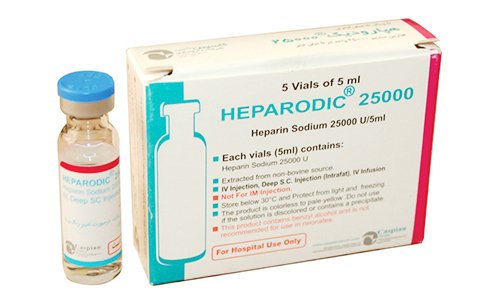
Keep away from light at temperatures below 30 ° C. Protect frost.
packing:
25,000 vials in 5 ml: 5-pack
Saler Company Information