

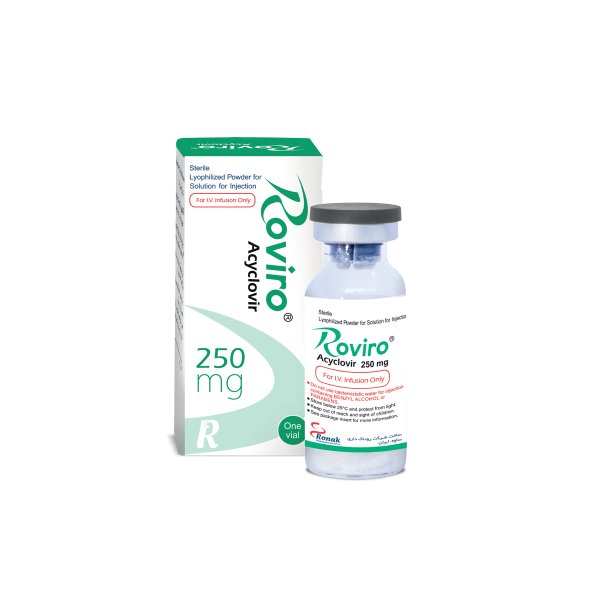
- Seen : 916 View
Contraindications and precautions
Fast injection of oscilloprene is prohibited and should be infused over an hour. The safety of this product has not been established in pregnancy and in children. At breastfeeding, patients with kidney failure or dehydration should be prescribed with caution.
Important drug interactions:
Pharmaceutical: 1) Although acyclovir itself has weak antiretroviral effects, it can exacerbate the antiretroviral effect of zidovudine. Of course, taking these two drugs simultaneously can cause neurotoxic effects and cause drowsiness and insomnia to the patient, which should be closely monitored if the disease is treated with these two drugs. 2) Consumption of aciclovir and probenzoids can increase plasma half-life and increase plasma concentrations below the plasma concentration curve - reduce acyclovir time and reduce urinary excretion and renal clearance. 3) Amphotericin, if used concurrently with acyclovir, can enhance the antiviral effect of acyclovir against ptosodurization in the laboratory environment. 4) Administration of ketoconazole with aciclovir may enhance the antiviral effect of acyclovir against the herpes simplex virus type 1 and 2 in the laboratory environment, which is dose-enhancing effect. Of course, the clinical value of this interference is unknown, and there is a need for more studies and studies. 5) If aziclovir and interferon are used against the herpes simplex virus type 1, more anti-viral effects are observed. So far, the clinical value of this article is still unclear and requires more research. 6) Injecting intravenous aciclovir with methotrexate interactal injection may cause neurological disorders. 7) The risk of kidney impairment increases if used simultaneously with aciclovir and other drugs that contain all toxic effects.
Laboratory: To date, effects of functional interaction have not been reported in laboratory studies regarding the use of acyclovir.
side effects
The most common: The most common side effects associated with oral aciclovir are edema and vomiting, which is observed in 5% of patients treated with this drug. Diarrhea is a common side effect of oral administration of this drug and is seen in 2% of patients. Of course, if the duration of treatment with this drug is short, the likelihood of these complications is less and the higher the use, the greater the chance of the emergence of these symptoms, for example those who are treated with high amounts of aciclovir for the treatment of shingles, 8% They get nauseous. The onset of nausea and vomiting after injection of aciclovir is not common. Headache is also one of the most common side effects of oral aciclovir in 12% of patients treated with long-term treatment. The most common complication associated with the use of injectable aciclovir is local reactions at the injection site. These topical reactions include skin irritation, erythema or inflammation, pain and phlebitis. If the drug is leaked while injecting it, the likelihood of the reaction is higher.
The most important: Ten percent of the patients who have been treated rapidly and in less than 10 minutes with intravenous treatment are impaired renal function, which is relative to those who slowly and slowly take this intravenous treatment One hour is 5%. Proliferation of kidney disorders is more likely to occur if the patient is already suffering from kidney disease or at the same time with acyclovir using another drug that has side effects on the kidney. Usually, after serum BUN or serum creatinine increased after acyclovir, it increased BUN or serum creatinine levels by adjusting the amount of aciclovir based on creatinine clearance or after discontinuation of the drug, or after correction of water and electrolyte disorders. Returns to aciclovir before starting treatment. However, in a number of people, this disorder in renal function leads to acute renal failure. Due to the fact that the maximum renal concentration of this drug is 2 hours after the intravenous injection, in order to reduce the risk of kidney complications, it is better in the first 2 hours of treatment, the patient is adequately hydrated and the volume of urine is appropriate. Other important but non-acute side effects of acyclovir include dizziness, feeling of imbalance, insomnia, restlessness, and decreased brain function. One percent of patients who use this drug in the form of an injectable form of epileptic seizures, such as confusion, dyspnea, tremor, hallucinations, and seizures. Anger, delirium, and light stomach feel may also be associated with taking the drug. Even one case of cerebrospinal fluid, coma and death has also been reported following the use of acyclovir.
Other complications: Other side effects caused by acyclovir include rash, hives, boils and hair loss. Also, intravenous use of this drug can be associated with complications such as thrombocytosis, thrombocytopathy, transient leukopenia, transient lymphopenia, and decreased bone marrow. Fever, joint pain, menstrual disorders, sore throat, lymphadenopathy, inguinal adenopathy, surface thrombophlebitis, swelling, muscle aches, ankle sprain and palpitations may also be seen with this drug. Other thirst, excessive transpiration, chest pain, hematuria, hypotension, and transient increases in serum ALT, AST, and alkaline phosphatase levels are other complications that may be due to the intravenous use of this drug.
Consumption in pregnancy and lactation
So far, adequate and controlled studies have been conducted on the safe and safe use of this drug during pregnancy
Saler Company Information