
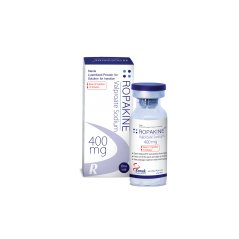
Ropakine 400
  • Seen : 14540 View

0
Ropakine 400

The generic name of the drug

Sodium valproate

Consumption in pregnancy:

D

Pharmacy Group - Therapy:

Derived Carboxylic Acid - Anticonvulsants

Pharmaceutical forms:

White fluorescein powder valproate sodium 400 mg to form a solution for intravenous infusion / infusion

Pharmacokinetics - Dynamics, Mechanism of Effect

Sodium valproate works by inhibiting voltage-dependent sodium channels and increasing the amount of GABA in the brain.

Sodium Valproate is rapidly and completely absorbed from the gastrointestinal tract. If taken with food afterwards, its absorption rate will be reduced without altering overall absorption.

Sodium valproate is widely distributed in the body. The amount of drug binding to plasma proteins is about 90%. Sodium valproate is mainly metabolized in the liver. Most of the metabolism of this referee is through glucuria and the remainder through beta-oxidation and omega-oxidation in mitochondria, with some of the resulting metabolites having pharmacologic activity. Life insurance for valproate is approximately 15 hours which may be shorter in patients with liver failure, older patients and children younger than 2 years of age, and in patients treated with other antiepileptic drugs. This drug is metabolized in the urine.

Consumption by indication

Simple and complex forms of focal and generalized epilepsy (absenteeism) and other forms of epilepsy (myoclonic, atonic)

Note: The serum level of treatment for most patients is in the range of 50-100 meg / mL. However, there is no exact relationship between the drug dosage, the serum level and the therapeutic effect. Therefore, the serum levels of the drug are not measured in a way.

Note: Valproate is used as a single drug (monotherapy) with an adjuvant in various types of epilepsy.

Adults and children

Monotherapy: First, 10-15mcg / kg is administered in 3 doses per day, and then 15-10 mg / kg per week is added daily to control seizures or if side effects prevent the dose from rising. The maintenance dose is typically 20-30 mg / kg per day. Adults can receive up to 60mg / kg in children and up to 25-30mg / kg / day in children. Doses above 250 mg / day should be given at separate doses.

Neonates: Use of this drug only in resistant epilepsy types.

The initial dose is 20 mg / kg and then given every 12 hours at 10 mg / kg.

The replacement of antiepileptic drugs by the sodium valproate sodium bank: Prescribe the sodium valproate as described above, and at the same time as initiating valproate administration, the dose of the antiepileptic drug is reduced to a lesser extent, and the same dose can be given every two weeks. In these cases, the patient's condition should be carefully controlled.

Sodium valproate as an adjuvant in combination antiepileptic drug: The method of prescribing and titration of the drug is performed in the order indicated. The maximum dose is less than when monotherapy is done with valproate.

Acute mania

Adults: Initially, 750 mg are administered in several doses individually, and then gradually increased to reach the appropriate clinical response. The maximum dose is 60 mg / kg or 2.4 g per day.

Migraine prophylaxis

Adults: 350 mg twice a day. Some patients need up to 1 g per day.

Side Uses:

Cushing's syndrome (to reduce cortisol secretion)

Fever and seizures

Infantile Spasm

Prolonged resistant stasis (used in the injectable form)

Anxiety Disorders

Hiccup Resistant

Spastic

Extreme pyramidal disorders

Contraindications and precautions

Do not give valproate to patients with a history of dysfunction or liver disease, with a history of severe liver disorder and hypersensitivity to the drug. Children under the age of 3 years and people with hereditary metabolic diseases, brain organic injury, severe seizure disorders, and mental retardation are more at risk for liver toxicity. Avoid taking these patients with caution, if possible, avoid administration of other antiepileptic drugs that may also cause damage to the liver. Do not use an injection of valproate into a patient with acute trauma and to prevent seizure after trauma (this has been associated with a higher death rate). The benefits and efficacy of de-valproex in the management of mania in people under the age of 18 years and for the treatment of migraine in people under the age of 16 years have not been proven. In the administration of valproate, be cautious with other blood coagulation drugs (such as aspirin and warfarin). Caution in patients with lupus erythematosus.

Important drug interactions:

1) It has been reported that in 6 children with epilepsy, simultaneous administration of aspirin has increased the half-life of valproic acid. This suggests that salicylates, in addition to displacing valproic acid from its binding site to the protein, may also inhibit its metabolism. Another hepatotoxic drug, such as valproate, is completely undesirable. Both valproate and aspirin affect platelet function. Naproxen also provides partial displacement in valproic acid bound to protein. But this effect is probably not very significant to have clinical effects. 2) Antidepressants may act as antiepileptic antagonists (as well as other antiepileptic drugs) by reducing the seizure threshold. 3) Anti-inflammatory agents: Feobarbine can increase the clearance and metabolism of valproate, and valproate also inhibits metabolism. Carbamazebin and technical injections are enzyme-inducing drugs, and they expect to increase the metabolism of valproate. But the effect of valproate on both drugs is complex. Looking for Exercise

Saler Company Information

Company : Ronak Pharmaceuticals
Phone : 00982188211811
More Information : View
Online order registration form
No comments have been posted yet
loading
Your comment has been sent
Ropakine 400

The generic name of the drug

Sodium valproate

Consumption in pregnancy:

D

Pharmacy Group - Therapy:

Derived Carboxylic Acid - Anticonvulsants

Pharmaceutical forms:

White fluorescein powder valproate sodium 400 mg to form a solution for intravenous infusion / infusion

Pharmacokinetics - Dynamics, Mechanism of Effect

Sodium valproate works by inhibiting voltage-dependent sodium channels and increasing the amount of GABA in the brain.

Sodium Valproate is rapidly and completely absorbed from the gastrointestinal tract. If taken with food afterwards, its absorption rate will be reduced without altering overall absorption.

Sodium valproate is widely distributed in the body. The amount of drug binding to plasma proteins is about 90%. Sodium valproate is mainly metabolized in the liver. Most of the metabolism of this referee is through glucuria and the remainder through beta-oxidation and omega-oxidation in mitochondria, with some of the resulting metabolites having pharmacologic activity. Life insurance for valproate is approximately 15 hours which may be shorter in patients with liver failure, older patients and children younger than 2 years of age, and in patients treated with other antiepileptic drugs. This drug is metabolized in the urine.

Consumption by indication

Simple and complex forms of focal and generalized epilepsy (absenteeism) and other forms of epilepsy (myoclonic, atonic)

Note: The serum level of treatment for most patients is in the range of 50-100 meg / mL. However, there is no exact relationship between the drug dosage, the serum level and the therapeutic effect. Therefore, the serum levels of the drug are not measured in a way.

Note: Valproate is used as a single drug (monotherapy) with an adjuvant in various types of epilepsy.

Adults and children

Monotherapy: First, 10-15mcg / kg is administered in 3 doses per day, and then 15-10 mg / kg per week is added daily to control seizures or if side effects prevent the dose from rising. The maintenance dose is typically 20-30 mg / kg per day. Adults can receive up to 60mg / kg in children and up to 25-30mg / kg / day in children. Doses above 250 mg / day should be given at separate doses.

Neonates: Use of this drug only in resistant epilepsy types.

The initial dose is 20 mg / kg and then given every 12 hours at 10 mg / kg.

The replacement of antiepileptic drugs by the sodium valproate sodium bank: Prescribe the sodium valproate as described above, and at the same time as initiating valproate administration, the dose of the antiepileptic drug is reduced to a lesser extent, and the same dose can be given every two weeks. In these cases, the patient's condition should be carefully controlled.

Sodium valproate as an adjuvant in combination antiepileptic drug: The method of prescribing and titration of the drug is performed in the order indicated. The maximum dose is less than when monotherapy is done with valproate.

Acute mania

Adults: Initially, 750 mg are administered in several doses individually, and then gradually increased to reach the appropriate clinical response. The maximum dose is 60 mg / kg or 2.4 g per day.

Migraine prophylaxis

Adults: 350 mg twice a day. Some patients need up to 1 g per day.

Side Uses:

Cushing's syndrome (to reduce cortisol secretion)

Fever and seizures

Infantile Spasm

Prolonged resistant stasis (used in the injectable form)

Anxiety Disorders

Hiccup Resistant

Spastic

Extreme pyramidal disorders

Contraindications and precautions

Do not give valproate to patients with a history of dysfunction or liver disease, with a history of severe liver disorder and hypersensitivity to the drug. Children under the age of 3 years and people with hereditary metabolic diseases, brain organic injury, severe seizure disorders, and mental retardation are more at risk for liver toxicity. Avoid taking these patients with caution, if possible, avoid administration of other antiepileptic drugs that may also cause damage to the liver. Do not use an injection of valproate into a patient with acute trauma and to prevent seizure after trauma (this has been associated with a higher death rate). The benefits and efficacy of de-valproex in the management of mania in people under the age of 18 years and for the treatment of migraine in people under the age of 16 years have not been proven. In the administration of valproate, be cautious with other blood coagulation drugs (such as aspirin and warfarin). Caution in patients with lupus erythematosus.

Important drug interactions:

1) It has been reported that in 6 children with epilepsy, simultaneous administration of aspirin has increased the half-life of valproic acid. This suggests that salicylates, in addition to displacing valproic acid from its binding site to the protein, may also inhibit its metabolism. Another hepatotoxic drug, such as valproate, is completely undesirable. Both valproate and aspirin affect platelet function. Naproxen also provides partial displacement in valproic acid bound to protein. But this effect is probably not very significant to have clinical effects. 2) Antidepressants may act as antiepileptic antagonists (as well as other antiepileptic drugs) by reducing the seizure threshold. 3) Anti-inflammatory agents: Feobarbine can increase the clearance and metabolism of valproate, and valproate also inhibits metabolism. Carbamazebin and technical injections are enzyme-inducing drugs, and they expect to increase the metabolism of valproate. But the effect of valproate on both drugs is complex. Looking for Exercise

Saler Company Information

Company : Ronak Pharmaceuticals
Phone : 00982188211811
More Information : View
Online order registration form