Iranian table (daisy dish and pen table)
  • Seen : 1800 View

0
Iranian table (daisy dish and pen table)

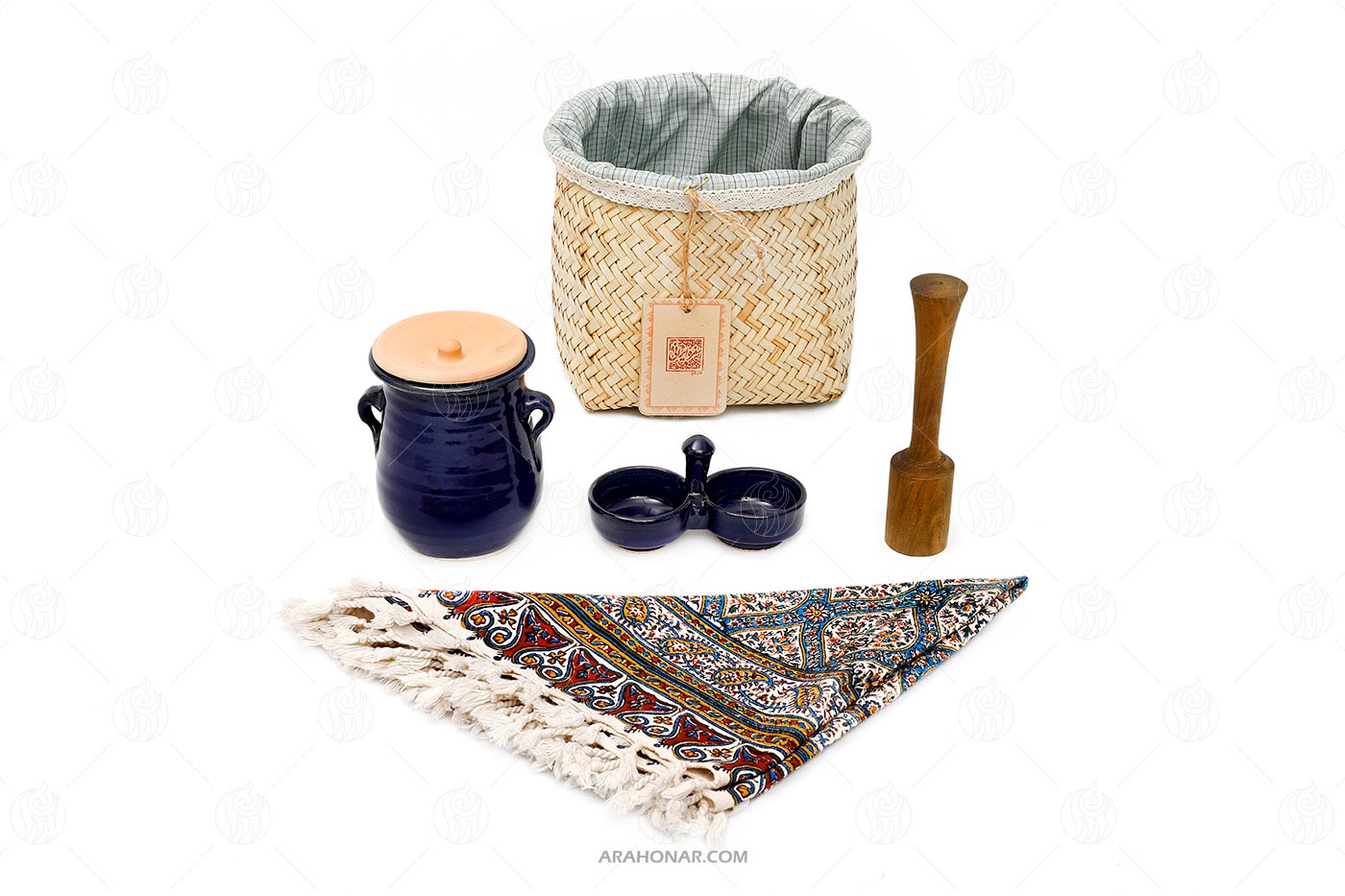
Persian table (daisy dish and pen table) is a special gift. Why do we say special? Because there is a special Iranian food in this package.

Daisy; It is a special food for us Iranians that many foreigners try once when they travel to Iran.

The most important feature of daisy is its eating habits. Special dishes and the order of eating have made Daisy a culture in the history of Iran.

This package can be a different gift for special guests, especially foreigners. They take this gift with them to their country. And there they introduce Iranian culture to their friends and acquaintances through Daisy.

With a right decision in choosing a gift, you can easily introduce the authentic Iranian culture, especially in food, to the world.

In the Iranian table set (Daisy table and pen table) there is a wicker basket made by the women of Bushehri, which is delicately and carefully woven.

In this basket, there is a daisy dish, a meat grinder, a salt and pepper shaker, and a writing table. To make your Iranian table colorful and Iranian. And it will be an attractive advertising and management gift for your collection.

In this package, you will hear the aroma of rural women's labor along with the smell of mats and toasted bread.

We have prepared Iranian tableware (Daisy tableware and Qalamkar tableware) with such a combination and in order to support rural women. In this Iranian lifestyle package, from the shadow of the presence of women to a complete Iranian meal, you will have access to it. This package can be a creative promotional gift centered on Iranian culture and supporting rural women for your collection.

Maybe those who receive this gift from you will ask you about how to make Daisy. We will explain a little about cooking Daisy.
How to prepare daisy with clay dish

Soak the chickpeas in water the night before, pour the meat along with fat, chickpeas, onions, grated tomatoes, turmeric and paste into a daisy container and add five times their volume of water. You should not add salt and spices first because it causes the meat to cook slowly.

When the meat is half cooked, add salt, spices and Omani lemon. When using a clay daisy, you must use a flame spreader. First increase the flame, when it boils, reduce the flame or put it in the oven. In the last hour of cooking, we add the potatoes.
Clay dishes

Pottery is one of the old and traditional human creations. This old handmade pottery is a very pure and original art of Iran. Pottery is one of the most enduring works of art. The study of ancient pottery can obtain general and comprehensive information about the economic situation and cultural development.

English writer Herbert Reid considers pottery to be the simplest and yet the most difficult art. The easiest because it is the most basic arts and the most difficult because it is the most abstract arts. Historically, pottery is among the oldest arts.
History of pottery in Iran

Today, in many cities of Iran, the pottery industry is still followed with special interest. And it has become one of the handicrafts of the people of these regions.

Laljin Hamadan, Meybod Yazd, Siahkol Gilan, Shahreza in Isfahan, Joibar Mazandaran and Kalpurgan in Sistan and Baluchistan are some of the areas where potters are active.

Of course, experts know that the pottery produced in each of these regions differs from the other in design, color, and type of material. This difference is caused by the geographical possibilities of potters.
Writing table

Etched; It is the art of printing or engraving on fabric. Pen work or the art of cloth penmanship means to depict different motifs on simple and unpatterned cloth by means of molds and stamps.

The material of Qalamkari fabric is linen, cotton, silk, chalwar and canvas. The best material for the pen is yarn. Because cotton fiber has more color acceptance than wool fiber and its color quality is better.
Mat weaving

Mat weaving is one of those handicrafts that is woven in different regions of Iran and the world in different ways and using different plants and is several thousand years old.

Usually, this art is more popular in the areas near the sea and the river, because the primary material for mat weaving is the plants of the marshes and rivers.

In many regions, the stem of wheat, barley, rice or palm tree leaves are used to weave mats. In Bushehr province, due to the abundance of leaves and fibers of dates and car plants similar to the stem of wheat, which is called khake in the local term. It has been common to produce all kinds of wicker products for a long time.

The method of mat weaving is that first they separate suitable and coordinated stalks (in terms of diameter) and soak them in water. Then they place three to five stems next to each other. And they wrap around it with the help of another stem. Then they weave them together and produce objects such as baskets, bags, bread or fruit holders, mats, wall hangings, etc.

To paint palm leaves, they prepare colored ink from Attari, which is called "Baqam".

Boqm is available in green, blue, purple and orange colors. And mat weavers mix it with turmeric so that its color has a better shine and becomes brighter.

The patterns are in mats or baskets and other mental products of the weaver. And they are woven in the form of convoluted and geometric rhombuses.

Saler Company Information

Company : Ara Honar Fakher Irani
Mobile : 00989220167904
Phone : 00982188930148
More Information : View
Online order registration form
No comments have been posted yet
loading
Your comment has been sent
Iranian table (daisy dish and pen table)

Persian table (daisy dish and pen table) is a special gift. Why do we say special? Because there is a special Iranian food in this package.

Daisy; It is a special food for us Iranians that many foreigners try once when they travel to Iran.

The most important feature of daisy is its eating habits. Special dishes and the order of eating have made Daisy a culture in the history of Iran.

This package can be a different gift for special guests, especially foreigners. They take this gift with them to their country. And there they introduce Iranian culture to their friends and acquaintances through Daisy.

With a right decision in choosing a gift, you can easily introduce the authentic Iranian culture, especially in food, to the world.

In the Iranian table set (Daisy table and pen table) there is a wicker basket made by the women of Bushehri, which is delicately and carefully woven.

In this basket, there is a daisy dish, a meat grinder, a salt and pepper shaker, and a writing table. To make your Iranian table colorful and Iranian. And it will be an attractive advertising and management gift for your collection.

In this package, you will hear the aroma of rural women's labor along with the smell of mats and toasted bread.

We have prepared Iranian tableware (Daisy tableware and Qalamkar tableware) with such a combination and in order to support rural women. In this Iranian lifestyle package, from the shadow of the presence of women to a complete Iranian meal, you will have access to it. This package can be a creative promotional gift centered on Iranian culture and supporting rural women for your collection.

Maybe those who receive this gift from you will ask you about how to make Daisy. We will explain a little about cooking Daisy.
How to prepare daisy with clay dish

Soak the chickpeas in water the night before, pour the meat along with fat, chickpeas, onions, grated tomatoes, turmeric and paste into a daisy container and add five times their volume of water. You should not add salt and spices first because it causes the meat to cook slowly.

When the meat is half cooked, add salt, spices and Omani lemon. When using a clay daisy, you must use a flame spreader. First increase the flame, when it boils, reduce the flame or put it in the oven. In the last hour of cooking, we add the potatoes.
Clay dishes

Pottery is one of the old and traditional human creations. This old handmade pottery is a very pure and original art of Iran. Pottery is one of the most enduring works of art. The study of ancient pottery can obtain general and comprehensive information about the economic situation and cultural development.

English writer Herbert Reid considers pottery to be the simplest and yet the most difficult art. The easiest because it is the most basic arts and the most difficult because it is the most abstract arts. Historically, pottery is among the oldest arts.
History of pottery in Iran

Today, in many cities of Iran, the pottery industry is still followed with special interest. And it has become one of the handicrafts of the people of these regions.

Laljin Hamadan, Meybod Yazd, Siahkol Gilan, Shahreza in Isfahan, Joibar Mazandaran and Kalpurgan in Sistan and Baluchistan are some of the areas where potters are active.

Of course, experts know that the pottery produced in each of these regions differs from the other in design, color, and type of material. This difference is caused by the geographical possibilities of potters.
Writing table

Etched; It is the art of printing or engraving on fabric. Pen work or the art of cloth penmanship means to depict different motifs on simple and unpatterned cloth by means of molds and stamps.

The material of Qalamkari fabric is linen, cotton, silk, chalwar and canvas. The best material for the pen is yarn. Because cotton fiber has more color acceptance than wool fiber and its color quality is better.
Mat weaving

Mat weaving is one of those handicrafts that is woven in different regions of Iran and the world in different ways and using different plants and is several thousand years old.

Usually, this art is more popular in the areas near the sea and the river, because the primary material for mat weaving is the plants of the marshes and rivers.

In many regions, the stem of wheat, barley, rice or palm tree leaves are used to weave mats. In Bushehr province, due to the abundance of leaves and fibers of dates and car plants similar to the stem of wheat, which is called khake in the local term. It has been common to produce all kinds of wicker products for a long time.

The method of mat weaving is that first they separate suitable and coordinated stalks (in terms of diameter) and soak them in water. Then they place three to five stems next to each other. And they wrap around it with the help of another stem. Then they weave them together and produce objects such as baskets, bags, bread or fruit holders, mats, wall hangings, etc.

To paint palm leaves, they prepare colored ink from Attari, which is called "Baqam".

Boqm is available in green, blue, purple and orange colors. And mat weavers mix it with turmeric so that its color has a better shine and becomes brighter.

The patterns are in mats or baskets and other mental products of the weaver. And they are woven in the form of convoluted and geometric rhombuses.

Saler Company Information
Company : Ara Honar Fakher Irani
Mobile : 00989220167904
Phone : 00982188930148
More Information : View
Online order registration form