

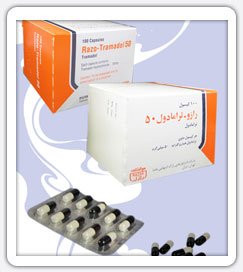
- Seen : 876 View
effective material :
Each capsule contains 50 mg tramadol hydrochloride.
chemical formula :
(+) Cis-2 - [(dimethylamino) methyl] -1- (methoxyphenyl) cyclohexanol hydrochloride (PDR 2007)
The mechanism of the work:
Tramadol is an opioid analgesic that acts on the central nervous system. Its mechanism of action is not fully known, but it may act by binding to the mu-opioid receptor and inhibiting the recapture of norepinephrine and serotonin. The ability of tramadol to inhibit neuronal absorption of monoamines and, at the same concentration of binding to opioid receptors, distinguishes it from ordinary veps. (PDR 2005)
Pharmacokinetics:
Absorption is fast and complete. The volume of distribution is 2.6 to 2.9 l / kg of body weight. It passes through the bloodstream of the rat and possibly human. The protein binding rate is 20% and its half-life is 3.6 hours in healthy people and its metabolite is up to 7.4 hours. The onset of the effect depends on the dose and usually up to one hour after consumption. 30% of its retrieval is unchanged from the kidney and 60% is metabolite and its delivery in women is slightly more than men. (USP DI 2005)
Drug use:
Tramadol is used to treat moderate to severe pain in adults. (PDR 2007)
Contraindications:
Do not take people with a history of hypersensitivity to yamyric tramadol, opioid derivatives. In acute cases, alcohol toxicity, sleep apnea and opioid analgesics affecting the central nervous system and opioids or psychotropic drugs should not be used. (PDR 2007)
Warnings and Attention:
- Do not increase the dosage without your doctor's advice.
- Use with caution in people with respiratory failure or history of stroke.
- If you have any new side effects when taking this medicine, ask your doctor.
(USP DI 2005)
Pregnancy and lactation:
Tramadol has the ability to cross the pair. There are not enough studies in humans and are classified in category C in the FDA classification. Also, oral intake of lactating women due to lack of adequate studies in newborns is not recommended. (USP DI 2005)
Drug Interactions:
Concomitant use of this drug with the following, as noted below:
An alcohol or anesthetic drug or central nervous system defective drugs such as three-ring anti-depressant
Painful opioids
Nutriazines
Sleepy and tranquilizers
Monoamine oxidase inhibitors (such as Procarbazine)
Quinidine
Propofenone (USP DI 2005)
Side effects and unwanted side effects:
Allergic reactions, abnormal weight gain, insomnia, diagnostic impairment, respiratory distress, hallucinations, hypotension, epilepsy, conjunctivitis, tachycardia, recurrence, urinary retention, urticaria, visual impairment, vibration (USP DI 2005)
Amount and method of administration:
In adults: 25 to 100 mg every 4 to 6 hours. The initial dose is 25 mg, which can be added every 25 days if necessary. If tolerated, the next dose may be increased by a dose of 50 mg every 3 days to 200 mg per day. After that you can take 100 mg of tramadol every 4 to 6 hours. In people who need a quick palliative effect, the initial dose of 50 to 100 mg is recommended.
In Lyme disease: children older than 8 years: 25.6 to 12.5 mg / kg 4 times a day (USP DI 2005)
The maximum dose in adults is up to 400 mg (in patients with a clearance of less than 30 ml / min, 200 mg)
In children: up to 16 years of age is not recommended.
In the elderly: In patients over 75 years of age, the maximum dose is 300 mg in divided doses
Maintenance :
Store in a container at a temperature between 15 ° C and 30 ° C.
packing :
There are 10 pcs of polyester in 100 packs.
Saler Company Information